Idea Spark
Tell us an interest, a hobby, or a problem that annoys you. We'll sketch three product directions and the real steps to make each one.
Idea Spark uses AI. Concepts are starting points to react to, not promises — any cost is an estimate, not a quote. JCH is a manufacturing network (35 U.S.C. 297), not an invention-promotion company; no income promises.
The path from idea to a product
Every concept Idea Spark gives you follows the same route to becoming a real thing you can hold and sell. Here is what that route looks like:
Idea Spark sketches the concept; JCH walks it through these stages with you. Any cost is an estimate, not a quote.
How Idea Spark works
Type an interest, a hobby, or a problem that annoys you — the more specific, the better. Idea Spark reads what you wrote and sketches three different product directions it could become, each with a short make-path from design to production. It is a brainstorming starting point, generated by AI, not a promise that any one concept will sell or make money.
What to do with your three concepts
Pick the one that excites you most — the one you would actually want to own. Don't worry if it feels rough; most real products start exactly this loosely. The next move is always the same: get it reviewed by someone who makes things for a living, so you learn what it really takes before you spend anything. A good review tells you which features drive the cost, whether the part should be molded, sewn, or machined, how many cavities a tool might need, and what the honest first step is. That is the difference between an idea that stalls in a drawer and one that becomes a part you can hold.
Why the make-path matters
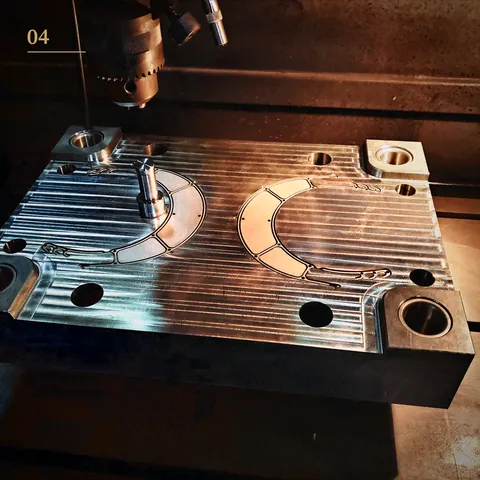
Design and DFM is where a sketch becomes a part that can actually be manufactured without surprises. Prototyping proves it works in your hands before any steel is cut. Tooling is the mold or fixture that lets you make the same part again and again to the same standard. Production is the repeatable run once the tool is proven. Knowing these four stages up front is what keeps a promising idea moving — and it is exactly the path JCH helps inventors and small brands walk, with an NDA first and no job too small.
Example: "I kayak a lot and my gear gets wet"
1. A sealed deck pouch
A waterproof, molded clip-on pouch for phone and keys that mounts to deck rigging.
2. A quick-dry gear organizer
A cut-and-sew mesh organizer that drains and dries, with molded clips.
3. A float-and-find accessory
A brightly colored floating case so dropped gear stays on the surface.
These are directions to react to, not a promise about any one product — many successful products start exactly this loosely. The next move is always the same: get the idea reviewed and pick the one worth prototyping.
Found one you like?
Send Jack the concept — he reviews it himself and tells you the real next step (design, prototype, tooling). NDA first, no job too small.
Book a 30-min callRead the full guide