Mold steel grades explained: P20, H13, S136, NAK80 (and when each is used)
The grade of steel a mold is cut from decides how hard it runs, how finely it polishes, whether it rusts, and how long it survives abrasive resins. Pre-hardened P20 and NAK80, heat-treated H13, and stainless S136/420 each sit at a different point — and your production volume, resin and surface requirement decide which one belongs on your part.
What a "mold steel grade" actually is
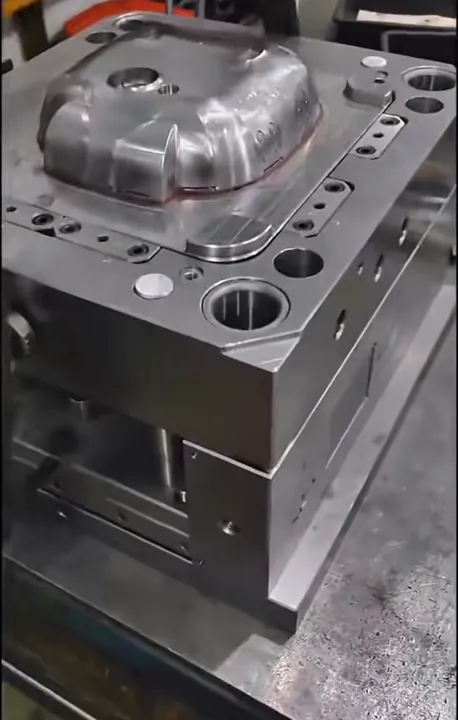
When a toolmaker quotes a mold, one of the first choices is the alloy the cavity and core blocks are cut from. That alloy — its grade — is not a detail; it is the single material decision that governs the mold's whole working life. A grade sets the hardness the steel can be run at, how deep and bright it will polish, how well it shrugs off the acids some resins give off, and how long its critical features hold their shape against abrasion and injection pressure. Because the tool is the most expensive and longest-lived asset in an injection program, picking the grade to match the job is where a lot of money is either saved or quietly wasted. The common production grades cluster into three families: pre-hardened steels, through-hardened (heat-treated) steels, and stainless steels. Understanding what each family buys you is enough to have an informed conversation with any toolmaker.
Pre-hardened steels: P20 and NAK80
Pre-hardened steels arrive from the mill already at their working hardness, so the toolmaker machines them straight to the finished cavity shape with no separate furnace-hardening step. That removes time from the build and removes the dimensional-change risk that heat treatment always carries, and it keeps the tool easy to modify later — a real advantage while a design is still settling.
P20 (1.2311; 1.2738 is the nickel-bearing version for large blocks, 1.2312 the sulphur free-machining version) is the workhorse general-purpose mold steel, typically supplied around 29–33 HRC. It machines and polishes reasonably, welds for repair without drama, and is an excellent fit for low-to-moderate volumes of unfilled, non-abrasive resins. Most prototype and short-to-mid-run production tools start here because P20 is forgiving and quick to turn into a working mold.
NAK80 is a pre-hardened steel supplied harder than P20, usually around 37–43 HRC, and its headline strength is polishability. It takes and holds a very fine, even polish and a clean EDM finish, which makes it a favourite for cosmetic and high-gloss cavities where P20 would look slightly soft but a full heat-treat is not wanted. You get most of a hardened tool's surface quality while keeping the no-heat-treat build advantage, at a higher material cost than plain P20.
Through-hardened (heat-treated) steel: H13
H13 (1.2344) is a chromium hot-work tool steel. It is machined in a soft, annealed state and then hardened in a furnace, commonly to around 48–52 HRC. That heat-treat step is what separates it from the pre-hardened family: it costs build time and demands careful handling for the small size change hardening causes, but in return H13 offers excellent toughness, strong resistance to thermal fatigue (the "heat checking" that cracks a tool surface over many hot-cold cycles), and the hardness to stand up to abrasive, glass- or mineral-filled resins. For high-volume production tools, for abrasive filled materials, and anywhere a long, low-maintenance program life is the goal, hardened H13 is a default answer. Its toughness also makes it the usual choice for slender cores and other high-stress details that a softer grade would deflect or wear.
Stainless steel: S136 and 420
Stainless grades are chosen for two reasons: corrosion resistance and polishability. S136 (1.2083 in its refined, electro-slag-remelted form) is a high-chromium stainless that hardens to roughly 48–52 HRC and polishes to a true optical mirror, which is why it dominates lens tooling, clear parts, medical components and high-gloss cosmetic work. Basic 420 stainless is the simpler, lower-cost member of the same family and covers corrosion-resistant jobs that do not need an optical finish. The corrosion point is not cosmetic: a resin that off-gasses acid, or a tool that sees water-cooling condensation, will pit and rust a non-stainless mold. Stainless resists that chemical attack from the inside out, so the finish survives even when the resin is aggressive.
Hardness (HRC) and what it buys
To pick a grade for your own job, use the mold steel selector.
| Grade | Family | Typical hardness | Best known for |
|---|---|---|---|
| P20 | Pre-hardened | ~29–33 HRC | General-purpose, fast build, easy to modify |
| NAK80 | Pre-hardened | ~37–43 HRC | Fine polish & EDM finish, no heat treat |
| H13 | Through-hardened | ~48–52 HRC | Toughness, heat-check & wear resistance, high volume |
| S136 | Stainless (hardened) | ~48–52 HRC | Corrosion resistance + optical mirror polish |
| 420 | Stainless | varies by temper | Corrosion resistance, lower-cost stainless |
Hardness is a trade-off, not a score to maximise. A softer grade (the high-20s to low-30s HRC of P20) is easy to machine, easy to polish, and easy to weld-repair or modify when a design changes — but it dents, wears and loses its finish sooner. A harder grade (upper-40s to low-50s HRC) holds tolerance, finish and wear-resistance over a long run, but it is slower and costlier to cut, more brittle, and far less forgiving of a careless weld repair, which can crack hardened steel unless it is pre-heated and re-tempered. The right hardness is the lowest one that comfortably survives your volume, resin and finish — not simply the highest available.
Polishability for optical and Class-A parts
The tool's surface sets the part's surface. If the part is a clear lens, a piano-black cosmetic face, or any Class-A show surface that has to look identical on the last shot as on the first, the grade has to both reach a fine polish and hold it. S136 and NAK80 are the go-to grades here because their fine, clean microstructure polishes to a high SPI A-grade mirror and resists the micro-abrasion that gradually dulls a softer tool. P20 polishes well enough for ordinary cosmetic work but does not reach true optical clarity, and under an abrasive resin or high-pressure fill it loses its shine faster. A matte or lightly textured functional part is far more forgiving and widens the case for a cheaper grade. How a finish is specified and achieved is covered in mold surface texture and finish.
Corrosion resistance for aggressive resins
Some resins attack the tool chemically. PVC releases hydrochloric acid as it degrades, many flame-retardant compounds carry halogens, and acetal (POM) can off-gas formaldehyde — all of which corrode and pit a non-stainless mold, especially around vents and in cooling lines. The clean fix is a stainless grade (S136 or 420) that resists the attack throughout the block. The alternative on a non-stainless tool is a protective surface — hard chrome or electroless-nickel plating — plus diligent rust-prevention when the tool sits idle. Condensation from aggressive water-cooling is a quieter version of the same problem, so even a benign resin can argue for stainless or plating if the tool runs cold and humid.
Wear resistance against glass-filled resins
Glass- and mineral-filled resins are abrasive: the reinforcing fibres scour the steel like a fine grit, and they concentrate the damage at the gate and in high-shear flow paths. A soft P20 gate can erode in a filled-nylon or filled-PBT run that an unfilled resin would never trouble. The defences are harder steel (hardened H13 or hardened stainless) and surface engineering — nitriding, or thin PVD coatings such as TiN or CrN — applied to the wear zones. A common, economical pattern is to build the bulk of the tool in a moderate grade and insert a hardened or coated detail only where the abrasion actually is, rather than paying for an all-hardened tool. The same filled resins that drive the grade decision also push related choices in aluminum vs steel tooling.
Tool life and how volume drives the grade
Tool life runs in tiers rather than fixed numbers. Pre-hardened P20 suits low-to-moderate production; NAK80 is similar with a better-held finish; hardened H13 and hardened stainless carry high-volume programs that can run for hundreds of thousands of cycles and beyond — a representative industry range for well-built hardened tools, not a promise for any specific mold, since resin, cavity count, design and maintenance all move the real number. The practical logic: let lifetime volume and resin pick the family first. Low or uncertain volume on a gentle resin → P20. Mid-volume cosmetic work → NAK80 for the finish. High volume, abrasive filled resin, or a long multi-year program → hardened H13. Corrosive resin or an optical surface → stainless S136 regardless of volume. A frequent staged path is to launch a design on a softer, cheaper grade and cut a hardened production tool once the design and the market are proven — the same volume-first thinking behind prototype vs production tooling and the cost math in injection-mold cost drivers.
Common questions
What is a mold steel grade? The specific alloy the cavity and core are cut from — P20, H13, S136, NAK80 — which sets hardness, polish, corrosion resistance and wear life.
Pre-hardened vs through-hardened? Pre-hardened (P20, NAK80) ships ready to machine, faster to build, softer; through-hardened (H13) is machined soft then heat-treated harder for volume and abrasion.
Best grade for clear or Class-A parts? S136 or NAK80, for their fine mirror polish and the hardness to hold it.
Best grade for PVC or flame-retardant resin? A stainless grade (S136 or 420) to resist the acids those resins give off.
How does volume decide? Low/uncertain → P20; mid cosmetic → NAK80; high-volume/abrasive → hardened H13; corrosive/optical → S136. Engineering estimate, not a quote.
JCH Design & Manufacturing can review your part, resin, target volume and finish and recommend the mold steel grade — P20, NAK80, H13 or stainless S136/420 — that fits the program, including hardened or coated inserts only where the wear is. Send your part and target quantity; NDA first.
Book a 30-minute callAsk JCH about mold steel grades
Have a question about mold steel grades? Ask our AI assistant. It answers from this website, and our tooling team follows up if you want.
AI assistant. Answers can be wrong; nothing it says is a quote or a promise.