Notebook Spine Thickness Calculator
A notebook's book block is its leaf count multiplied by the paper caliper, which is the same as its page count divided by the paper's pages-per-inch (PPI); the spine then adds one cover thickness on each side. Ninety-six leaves (192 pages) of a 60# offset sheet listed at 4.2 mils make a block 10.24 mm thick. Wrap 2 mm board in 0.95 mm cork on each side and the spine comes to 16.14 mm. A 10 mm pen held in a loop with a 1 mm wall measures 12.0 mm across, so it rides inside that thickness with 4.14 mm to spare; on the same paper and covers, any block of 57 leaves (114 pages) or fewer leaves the loop standing proud. Enter your own count, paper, cover build and pen below.
Planning figures, not a quote. PrintNinja's guide warns that "Exact caliper values vary between paper mills and batches," so a bound dummy measured with calipers settles the spine before the cover art is final.
How this works
A notebook gets its thickness from three stacked things: the paper in the book block, the cover on each side of it, and anything that rides on the outside, such as a pen in a loop. The calculator handles them in that order. It never uses the paper's weight to guess thickness, because two sheets of identical weight can measure quite differently; it asks for a caliper or a PPI, which are measured thickness figures, and treats the weight as a cross-check.
Pages and leaves. Wikipedia's article on the page puts it plainly: "A page is one side of a leaf (a sheet or half-sheet) of paper, parchment or other material …" A 192-page notebook therefore holds 96 leaves. Mixing the two up doubles or halves the computed book block, and PrintNinja's spine guide warns about the same slip from the other direction: "A page count of 200 means 200 individual pages (100 sheets, printed front and back)." If a count is odd, the last leaf still exists with one blank face, so the calculator rounds leaves up.
Caliper and PPI. Caliper is the thickness of one leaf, quoted in mils (thousandths of an inch) or micrometers. Walsworth's guide for publishers spells PPI out as "Pages Per Inch": the number of printed faces that stack to one inch. Because each leaf carries two faces, PPI and caliper are linked by PPI × caliper in mils ≈ 2,000. The Finch Fine sheet shows it: 80 lb text at a caliper of 5.6 (the sheet prints no unit; mils is our reading) lists 358 PPI, and 358 × 5.6 = 2,005. So block thickness can be written either way, leaves × caliper or pages ÷ PPI, and the calculator shows both when you have both.
Weight is not thickness. Grammage is mass per unit area. Pound ratings are the weight of a 500-sheet ream at a basis size that depends on the grade: 25 × 38 in for text or book, 17 × 22 in for bond and 20 × 26 in for cover, per Wikipedia's grammage article and Walsworth's guide. Wikipedia lists cover reams as "500 or 1000" sheets; this page uses 500 (our reading). Dividing by the ream's area gives the conversion. Wikipedia's paper density article gives density as grammage divided by caliper, so once both are known the calculator prints a density in g/cm³. A sheet that comes out far denser or bulkier than its neighbors is a hint that one of the two figures was copied wrong.
Covers. PrintNinja says case binding "Adds the thickness of two binder's boards (typically 2–3 mm each) plus the endsheets." This page follows the simple version of that build: spine = block + 2 × cover, where cover is whatever sits on one side, board plus cork or cloth plus any layer you can measure. Endsheets are paper, so add their leaves to the count.
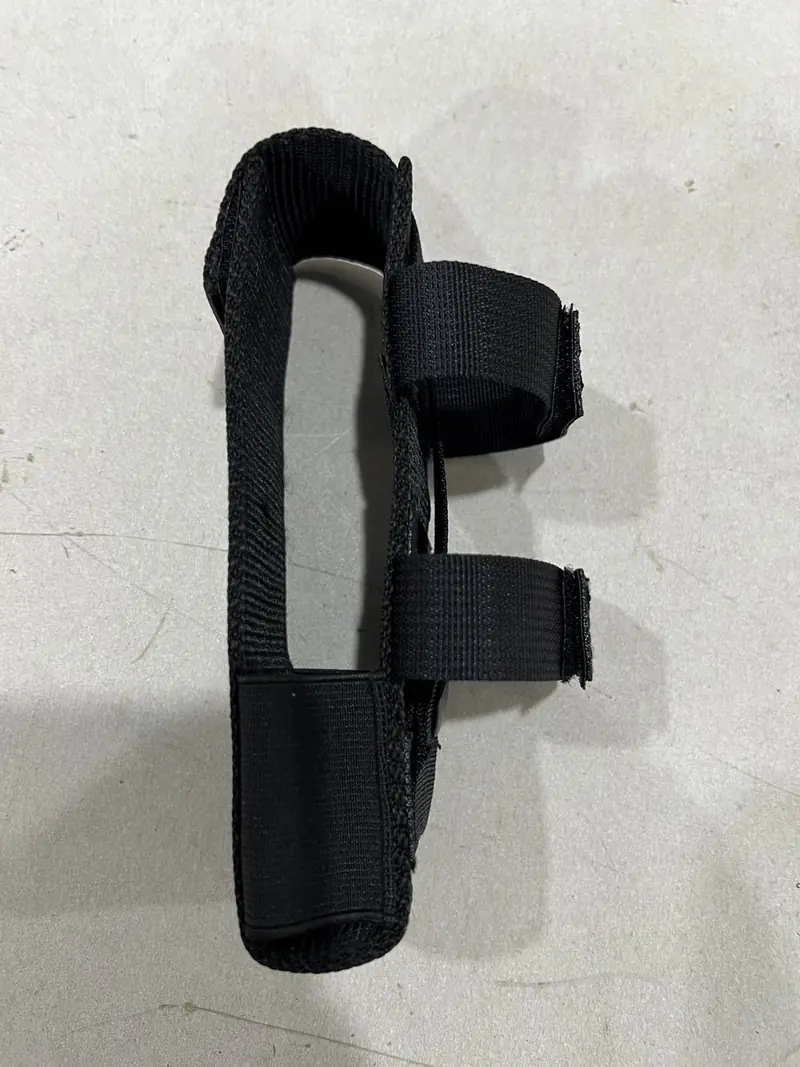
The pen loop. A loop holding a round pen is a ring whose outside diameter is the pen plus two wall thicknesses. Mounted on the spine, that ring either fits between the planes of the two covers or pokes past them. The calculator compares the loaded loop with the spine, reports the thicker of the two as the closed book's thickest point, and finds the fewest pages that would bring the spine up to the loop. For a loop cut from a material that does not stretch, it also gives the centerline length of the ring, π × (pen + wall), before any seam or attachment allowance.
Published paper calipers and PPI
The presets carry the figures exactly as each mill or printer prints them, with the stock, weight and finish they apply to. Micrometers are our conversion at 25.4 µm per mil. A preset is a stand-in until the exact paper for your run has a spec sheet; the moment it does, type its caliper over the preset.
| Stock and condition, as listed | Weight | Caliper per leaf | PPI | Source |
|---|---|---|---|---|
| Pennacook Offset, uncoated freesheet, "Smooth finish" | 50# book, 74 gsm | 3.5 mils (88.9 µm) | not listed | ND Paper Pennacook sheet, May 2026 |
| Same | 60# book, 89 gsm | 4.2 mils (106.68 µm) | not listed | |
| Same | 70# book, 104 gsm | 4.9 mils (124.46 µm) | not listed | |
| Same | 80# book, 118 gsm | 5.5 mils (139.7 µm) | not listed | |
| Finch Fine, Bright White, Ultra Smooth | 70 / 80 lb text | 4.9 / 5.6 (no unit printed; mils: our reading) | 408 / 358 | Finch Fine product sheet, July 2025 |
| Finch Fine, Bright White, Antique (listed as "available on a make-order basis") | 70 / 80 lb text | 5.4 / 6.2 (no unit printed; mils: our reading) | 370 / 322 | |
| KDP black-and-white interior, white paper | "50-61 pound (74-90 GSM)" | "page count x 0.002252" in per page, so 4.504 mils per leaf | not listed | KDP cover help; weights from KDP paper help, which adds "Paper weight varies based on printing location." |
| KDP black-and-white interior, cream paper | "50-61 pound (74-90 GSM)" | "page count x 0.0025" in per page, so 5.0 mils per leaf | not listed | |
| Lulu softcover perfect bound | not stated | not stated | 444 used as PPI (our reading; Lulu names only its 460 figure PPI), from "(pages / 444) + 0.06” = Spine Width" | Lulu spine article |
Two things stand out in the table. First, finish moves thickness as much as weight does: Finch's 80 lb text is 5.6 mils in Ultra Smooth and 6.2 mils in Antique, about 10.7% thicker for the same pounds. Second, the print-on-demand figures are per page, half a leaf. KDP's 0.002252 in per page is 0.004504 in per leaf, which falls between Pennacook's 60# and 70# for thickness while KDP describes that paper as 74 to 90 gsm. Different papers carry different densities; the table is a range to plan inside, not a substitute for the sheet you will buy.
Cover materials
A cork cover can be built two ways: cork fabric bonded over a board, or cork fabric used as a soft cover on its own. For board, PrintNinja gives binder's board as "usually 2–3 mm thick." For cork fabric, Colorway Arts gives its sheet as "around 0.4mm" and adds that "the thick cork fabric you find in quilt stores is usually around 0.8 - 1mm thick," and an MB Cork listing gives "Approx. 0.95 mm." The worked example below pairs the low end of the board range with the 0.95 mm cork. Your own cover could be thinner or thicker; measure a laminated sample, because adhesive and any backing add to the stack.
Worked example: an A5 cork notebook with a spine pen loop
An A5 notebook (148 × 210 mm, the ISO 216 size per Wikipedia's ISO 216 table) with 192 pages of Pennacook Offset 60#, covers of 2 mm board under 0.95 mm cork, and a pen loop on the spine. The pen diameter of 10 mm and the loop wall of 1 mm are example values chosen for this page, not figures from a source; measure the real pen and the real loop material. Press Load the 192-page example to put these inputs in the form.
Checked against published cases
We ran this page's calculation script in Node on three cases that a printer or a mill has already answered in print.
| Published case | Published answer | This page |
|---|---|---|
| PrintNinja: a 308-page cream book at KDP, which lists cream at 0.0025 in per page | "0.77″ on KDP" | 308 pages, 5.0 mils per leaf, covers 0: block 154 × 0.005 = 0.7700 in |
| Lulu softcover perfect bound, pages / 444, 222 pages | "(pages / 444) + 0.06” = Spine Width": 0.5 + 0.06 = 0.56 in | PPI basis, 222 pages, 0.03 in per cover (Lulu's 0.06 in split over two sides: our reading): 0.5600 in |
| Finch Fine 80 lb text Ultra Smooth: 358 PPI and 5.6 mils | 358 pages stack to 1 in | PPI basis: 1.0000 in. Caliper basis: 179 × 0.0056 = 1.0024 in, a 0.24% gap between the sheet's two columns |
The pound-to-gsm factor was checked the same way against the Pennacook sheet, which lists both: 50#, 60#, 70# and 80# book come out at 74.0, 88.8, 103.6 and 118.4 gsm against 74, 89, 104 and 118 listed.
Common mistakes
- Feeding a per-page figure in as caliper. Print-on-demand formulas multiply page count by a per-page thickness. Typed into a caliper-per-leaf field, that number halves the block. Double it first, as the KDP presets here do.
- Comparing text pounds with cover pounds. By the basis-sheet arithmetic above, 80 lb text is about 118 gsm and 80 lb cover about 216 gsm. Same number on the label, nearly twice the weight per square meter.
- Trusting weight alone. Finch's own sheet shows two 80 lb text papers 0.6 mils apart. Over 100 leaves that is 0.06 in, or about 1.5 mm, which is enough to change whether a pen loop clears.
- Forgetting the extra leaves. Endsheets, a rear pocket, a perforated section or a printed index all add leaves. Count every physical leaf between the covers.
- Measuring the pen at the barrel. The loop has to pass the widest point that slides into it, which may be the cap or the clip rather than the barrel. Measure there, and if the pen is slid in clip-first, include the clip.
- Sizing the carton from the spine. When the loop is proud, the thickest point is the loop. Use the larger figure as the depth in the carton calculator.
When this page fits, and when another tool fits better
| Need | Better tool | Why |
|---|---|---|
| Block and spine of a notebook, journal or planner, with a cover build and a pen loop | This page | Leaves, caliper or PPI, cover per side and loop fit in one pass |
| A print-ready cover file for a print-on-demand service | That service's own spine calculator or template | Its paper and allowances decide the file it will accept |
| A shipper for many finished notebooks | Carton size calculator | Takes trim size and the thickest point from here as the unit size |
| The dimensional weight a parcel carrier assigns to that shipper | Dimensional weight calculator | Uses the carton's outside size and a carrier divisor |
| How many bound copies to pull, and the defect count that fails the lot | AQL sampling calculator | Sample size and accept/reject numbers for the lot |
| The final number | A bound dummy and a pair of calipers | Real paper, real glue, real covers, measured |
Sources, all read November 20, 2026. ND Paper, Pennacook Offset sheet (weights, gsm and calipers in mils). Finch Fine product sheet, July 2025 (caliper and PPI by finish; Antique make-order). KDP, paperback cover help (per-page spine factors) and KDP, paper and ink help (paper weights). Lulu, How is spine width calculated. PrintNinja, spine width calculator guide (pages vs sheets, binder's board, the 308-page comparison). Walsworth, paper basis weights (PPI, basis sizes). Wikipedia, Page (paper). Wikipedia, Grammage (ream basis sizes). Wikipedia, Paper density. Wikipedia, ISO 216 (A and B sizes). Colorway Arts, natural cork fabric and MB Cork, natural cork fabric (cork thickness). Conversion constants (NIST SP 811, Appendix B.8): inch, mil and square inch exact; pound 4.535 924 E-01 kg. Ours, not from any source: the 1 mm flush band, the split of Lulu's allowance, the 3% and density sanity bands, and the example pen and wall sizes.
Reviewed by the JCH tooling team · updated November 2026.
Notebook spine questions
What is the difference between a page and a leaf in a notebook?
A leaf is one physical piece of paper in the bound block; it has a front and a back, and each of those two faces counts as a page. So a 160-page journal holds 80 leaves. Spine math has to run on leaves, because the thickness you can measure belongs to the paper, while page numbers only count faces.
How do I turn a paper's PPI into a block thickness?
Divide the page count by the PPI figure the mill or printer publishes and the answer comes out in inches; multiply by 25.4 for millimeters. As an illustration, 240 pages on a 408 PPI stock come to 0.588 in, or 14.94 mm. Use the PPI for the exact grade and finish you are buying, because finish shifts it: Finch lists its 80 lb text at 358 PPI in Ultra Smooth but 322 in Antique.
Does a heavier paper always make a thicker notebook?
Not reliably. Weight measures mass per area, while thickness also depends on how dense the sheet is. On the Finch Fine spec sheet, 80 lb text in the Antique finish is listed at 6.2 mils against 5.6 mils for Ultra Smooth, so finish alone moves a 200-page block from about 0.56 in to 0.62 in. Ask for the caliper, not just the weight.
How thick is the board or cork on a notebook cover?
It depends on the build, so measure the material you will actually use. For reference, PrintNinja describes binder's board on case-bound books as typically 2 to 3 mm per board, and cork fabric listings we read range from about 0.4 mm up to roughly 1 mm. A cork-wrapped board cover is the sum of the board, the cork and any adhesive layer, counted once for each side.
Will a pen loop on the spine make the notebook thicker?
Only when the loop is wider than the closed book. With a pen in it, the loop measures the pen diameter plus two wall thicknesses. If that figure is smaller than the spine, the pen stays within the outline of the closed book; if it is larger, the loop becomes the thickest point and sets the stacking height and carton depth.
Why do two printers quote different spine widths for the same page count?
Printers can run different paper stocks, and cover allowances differ too (our reading). PrintNinja points to a 308-page cream book measuring 0.77 in at one print-on-demand service and 0.691 in at another. For a print-ready cover file, follow the template from the printer that will bind the job, then confirm with a bound sample.
Can I convert pound paper weights to gsm?
Yes, if you know which basis sheet the pound figure refers to. A pound rating is the weight of one ream at a fixed basis size, 500 sheets for text and bond, so divide the pounds by that ream's area. Text or book stock converts at about 1.48 gsm per pound, bond at about 3.76 and cover at about 2.70 if its ream is 500 sheets (our reading). Check which basis a quote uses before converting.
Ask JCH about your notebook build
Wondering whether a lighter stock or a slimmer loop would solve the fit? Type the question here. Ask JCH replies with an AI model, and after its first reply it shows an optional box for your email in case you want a follow-up. Your most recent result from this page travels with the question.
Replies are machine-written and may contain mistakes. None of them is an offer.
Planning a notebook, journal or planner?
Send us the trim size, the page count, the paper you have in mind and how the cover is built. We will run the spine, the pen loop and the shipper as one set of numbers, so the cover file and the carton drawing agree before anything is bound.
Book a free 30-minute first consultation Send the notebook spec