What is a family mold, and when does it make sense?
A family mold is one tool that makes several different parts in a single cycle — a matched set, like an enclosure's two halves plus a clip. One tool instead of several can lower tooling cost, but it comes with one core constraint: every cycle makes one full set — one of each part when each has a single cavity, the usual case this page assumes — a fixed 1:1 ratio.
How it differs from a multi-cavity mold
A standard multi-cavity mold makes several copies of the same part. A family mold holds several different cavities in one tool, so a single shot produces a set of different parts. (For the single vs. multi-cavity decision itself, see single vs multi-cavity tooling.) The appeal is one tool base, one setup, one run — instead of juggling separate molds for each piece of a product.
When a family mold is the right call
- The parts are a matched kit used together in the same numbers (the two halves of a case, a lid and a base).
- They're similar in size, wall thickness, and material, so the cavities fill evenly.
- Your up-front tooling budget matters more than per-part scheduling flexibility.
When it isn't the right call
- Mismatched parts → uneven fill. Because the cavities are different sizes, the runner can't be naturally balanced the way it can for identical cavities: a small cavity fills and packs first and can flash or over-pack while a big one is still filling (risking a short shot on the big part). Example: a two-part housing plus a tiny clip — the large halves and the tiny clip want very different fill rates, so the tool needs careful gate/runner sizing. A good toolmaker shows you the fill balance (a mold-flow or short-shot study) before steel is cut, and you should budget for a sampling pass where gates are opened or trimmed to rebalance. Parts also cool and shrink differently, and the cycle time is set by the slowest part (the thickest wall / biggest part), so the small parts wait on the big one.
- Different quantities. The 1:1 ratio means you can't make more of one part without making more of all of them. Need far more of one piece and you either over-produce the others (wasting material and money) or add complexity — a valve gate or a physically blocked cavity — to stop running the ones you don't need.
The 1:1 ratio, and why it ties your hands
Because every shot makes one of each part, a family mold couples the parts together in ways that bite later:
- One damaged cavity usually stops everything — if the clip cavity cracks, the whole tool typically comes offline until it's fixed. (You can deliberately block or valve-gate a cavity to keep running without it — but then you're no longer making the full matched set.)
- All the parts must share one resin, color, and shrink behavior — you can't run the halves in one material and the clip in another.
- Maintenance and tool changes hit all parts at once — you service the set, not one piece.
For a kit consumed in equal numbers that's all fine; for parts with different demand, materials, or lifespans it's a real limitation to weigh against the tooling saving.
The alternatives
- Separate tools (one per part) — independent scheduling and easier balancing, at a higher total tooling cost.
- A mold base built for insert cavities — the different parts go in as inserts, so a damaged one can be replaced or reworked without re-cutting the whole tool. (Running one part truly on its own still needs a matching insert set or a blank for the empty positions, so it's a maintenance convenience more than full independence.)
The right answer depends on how matched your parts are and how independently you need to run them. The cleanest way to decide is to price the family tool against separate tools side by side — one up-front number vs. several, against how independently you need to run each part. A manufacturer that quotes both lets you choose on the real trade-off, not a default.
A quick decision check
Three yes/no questions — if you can't say "yes" to all three, lean toward separate tools:
- Will all the parts use the same material, color, and similar wall thickness?
- Do you need them in roughly equal quantities over the product's life?
- Are they always used together as a set?
Balancing a family tool: what can be adjusted
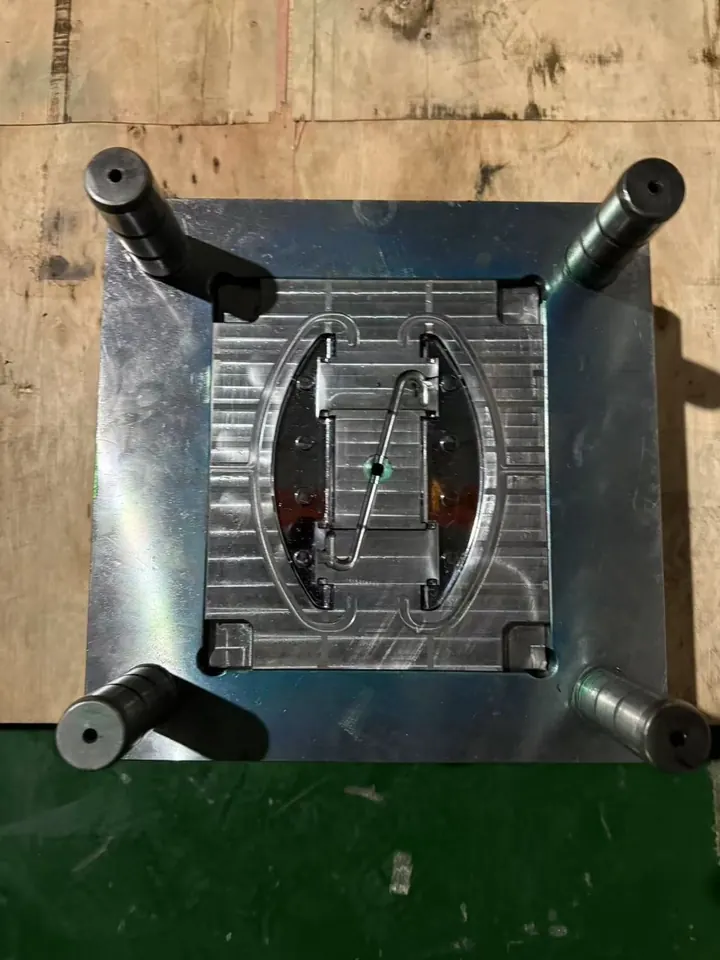
Plastics Technology's runner-sizing series states the target plainly: every part in the set should finish filling at the same moment, not merely start together, because a cavity that fills early keeps taking pressure and gets over-packed while the larger parts catch up. A toolmaker has three main ways to get there.
| Method | How it balances | Limits |
|---|---|---|
| Runner branch sizing (cold runner) | Each branch is cut to a diameter that delivers flow in proportion to the volume of the part it feeds. | Fixed in steel for one resin and process window; a grade change can upset it. |
| Gate trimming | Changes melt speed through the gate and when the gate freezes, not the volume of flow the cavity receives. | Plastics Technology advises balancing through runner sizes, because gate changes only shift gate speed and seal time. Use for fine-tuning only. |
| Valve-gate hot runner with per-gate control | MoldMaking Technology describes servo-driven valve pins whose stroke, speed and force are set per cavity, so each part gets its own fill and pack and the small part is not over-fed or flashed. | The most hardware and heated-system upkeep; see hot vs cold runners. |
Proving the family tool at sampling
- Short-shot series. Mold shots stepped from well short to nearly full and lay the sets out in order. The part that completes first is the over-packing risk; the last is the short-shot risk.
- Weigh each part on its own. Weigh every part across consecutive shots against its expected weight from volume and density (the part weight calculator does this). A part that runs heavy is being packed harder than its neighbors.
- Measure at the production setting. Dimensions only count at the single setting that will run the whole set, not one tuned for a single part.
Scrap is set-wide in the same way the ratio is. Suppose an order needs 5,000 complete kits, the housing halves reject at 1 in 100 and the clip at 5 in 100 (illustrative rates, not measured ones). Output is governed by the clip: 5,000 ÷ 0.95 = 5,264 shots. Those shots yield about 5,264 × 0.99 = 5,211 good halves of each kind, roughly 211 surplus per half. Fix the cavity with the worst reject rate first: it sets how many shots the whole set needs.
Sources for this section:
- Plastics Technology: How to properly size gates, runners and sprues, part 5 (balancing family molds)
- MoldMaking Technology: How to better balance family molds
Common questions
What is a family mold? A single tool holding several different cavities that produces a matched set of different parts — like a product's full piece-set — in one molding cycle.
When does it make sense? When the parts share material, color, and similar wall thickness, are needed in roughly equal numbers, and are used together as a kit.
When is it a bad idea? When parts differ a lot in size (the mismatched cavities fill unevenly and are hard to balance) or are needed in different quantities (the 1:1 ratio forces you to over-produce some).
What's the 1:1 catch? Every shot makes one of each, so production, material, inventory, and maintenance of all the parts are tied together — one cracked cavity usually takes the whole tool offline.
Alternatives? Separate single/multi-cavity tools (independent scheduling, higher total tooling), or a mold base with insert cavities so one part can be replaced without re-cutting the whole tool.
JCH Design & Manufacturing can look at your set of parts and the quantity you need of each, and tell you honestly whether to combine them into a family tool or keep them separate. Send the parts and target numbers; NDA first.
Book a 30-minute call