What are structural foam and gas-assist molding?
Two injection-molding variants for large or thick-walled parts — the cases where a thick solid wall would sink, warp, and need heavy clamp tonnage. Structural foam foams the core while the skin stays solid, giving a rigid part at low clamp. Gas-assist injects nitrogen to hollow thick sections so they don't sink. Both make big, stiff parts that straight solid molding handles poorly.
JCH coordinates process and press selection through a manufacturing network; this page is general guidance, not a quote.
Structural foam, in one picture
A blowing agent (chemical or gas) is mixed into the melt; as the part fills, the core foams into a cellular structure while the outer skin stays solid — a sandwich that's rigid for its weight. Because the foam does the packing, the process runs at much lower clamp pressure, which is why a big part that would need a huge press as a solid molding can run on a smaller one as foam.
- Wins: large rigid parts at low clamp, little sink or warp in thick walls, high stiffness-to-weight, lighter parts.
- Trade-off: a swirl / mottled surface (so a cosmetic part needs paint or a heavy texture), somewhat thicker walls, a slightly longer cycle.
- Typical parts: enclosures and cabinets, pallets and trays, machine covers, equipment housings, large structural panels.
Gas-assist, in one picture
Nitrogen is injected into the melt and runs through designed channels, hollowing out the thick sections and packing the part from the inside. A thick rib, a boss, or a tubular handle comes out rigid and light instead of sunken. Mechanically the two differ at the injection point too: gas-assist adds nitrogen through a pin or nozzle and often needs a vent or gas-out step, while structural foam works by a blowing agent (a chemical additive or an injected gas such as nitrogen) in the melt.
- Wins: thick sections without sink, hollow stiff channels (built-in handles and ribs), less material, often a shorter cycle (the hollow core cools faster), somewhat lower clamp, and a better surface than foam — including for cosmetic parts.
- Trade-off: the gas channels must be designed carefully and the process controlled — gas going where it shouldn't (blowout or "fingering") is the failure mode, so it's a specialist process.
- Typical parts: handles, chair and table bases, large panels with deep ribs, TV/monitor bezels, thick-sectioned housings.
Which to use
| Your part | Process |
|---|---|
| Large, typically uniformly thick, rigid, surface can be textured/painted | Structural foam |
| Localized thick sections, heavy ribs, tubular features, better surface wanted | Gas-assist |
| Thin, uniform walls | Conventional injection molding — neither is needed |
The surface requirement is often the deciding factor: the same shape as a hidden structural part and as a visible cosmetic part can want different processes. Reaching for foam or gas on a part that doesn't need it just adds cost and process risk.
What we need to recommend one
The part's size and geometry (a model or drawing), the wall thickness and where the thick sections are, your stiffness and weight targets, the surface requirement (structural and hidden, or cosmetic and visible), and your annual volume. With those, the choice between conventional, structural foam, and gas-assist is made on the part's real needs, and the tooling and press matched to it.
Why thick parts need a different process
Standard injection moulding fights thick walls — a thick section cools slowly from the outside in, so the core shrinks last and pulls the surface inward, leaving sink marks, internal voids and warp. Structural foam and gas-assist both exist to make thick, stiff parts without those defects, by changing what happens in the thick section rather than fighting physics with pressure. Structural foam mixes a blowing agent into the melt so the core foams into a cellular structure while the skin stays solid, giving a thick, rigid, lightweight wall with a sandwich structure — solid skins over a foamed core — that resists bending far better than its weight suggests. Gas-assist injects pressurised gas to hollow out thick sections and channels from the inside, packing the part against the tool from within. Both let you design the thick, stiff geometry a part needs without the sink and warp that would doom it in conventional moulding.
Structural foam: big, stiff, light parts
Structural foam suits large, thick, structural parts where stiffness-to-weight matters more than a cosmetic surface — equipment housings, pallets, panels, enclosures, totes. The foamed core raises the section stiffness without the sink a solid thick wall would show, and it runs at lower injection pressures, which means lower clamp tonnage and often cheaper, lighter tooling than a solid part of the same size would need. The trade-off is the surface: the foaming process typically leaves a swirl or splay pattern on the skin, so structural-foam parts are usually painted, textured or specified for applications where the cosmetic surface is not critical. When the job is a large rigid part that must be light and stable and does not need a Class-A face, structural foam is often the most economical way to get there.
Gas-assist: hollow where it helps
Gas-assist moulding shines where a part mixes thin walls with thick ribs, handles, or frame sections — the gas hollows the thick bits so they pack out solid against the tool without sink, while the thin walls mould normally. It cuts material and weight in the thick sections, reduces sink and warp opposite heavy ribs, lowers the pressure and clamp force needed, and can stiffen a part by turning a solid rib into a hollow tube, which is a more efficient structure for the same material. Designing for it means planning the gas channels deliberately — where the gas enters, the path it follows through the thick sections, and where it should and should not go — because uncontrolled gas can blow through into thin walls. Done well, gas-assist produces a part that would sink or warp as a solid moulding and does neither.
Choosing between them and the alternatives
Which process fits comes down to the part's geometry and what it has to be. Structural foam answers large, uniformly thick, structural parts that can accept a textured or painted surface; gas-assist answers parts with localised thick sections, ribs or handles joined to thinner walls, especially when a good surface is wanted. If the part is thin-walled and cosmetic, conventional moulding with proper rib design is simpler and cheaper; if it is genuinely thick and solid is required, the design usually should be re-thought to core out the thick section rather than mould it solid at all. These are specialised processes with their own tooling and machine needs, so they earn their place on the parts that truly need thick, stiff, light geometry — and we will point to plain moulding with good ribbing when that meets the need without the added process.
Checking first samples from a foam or gas-assist tool
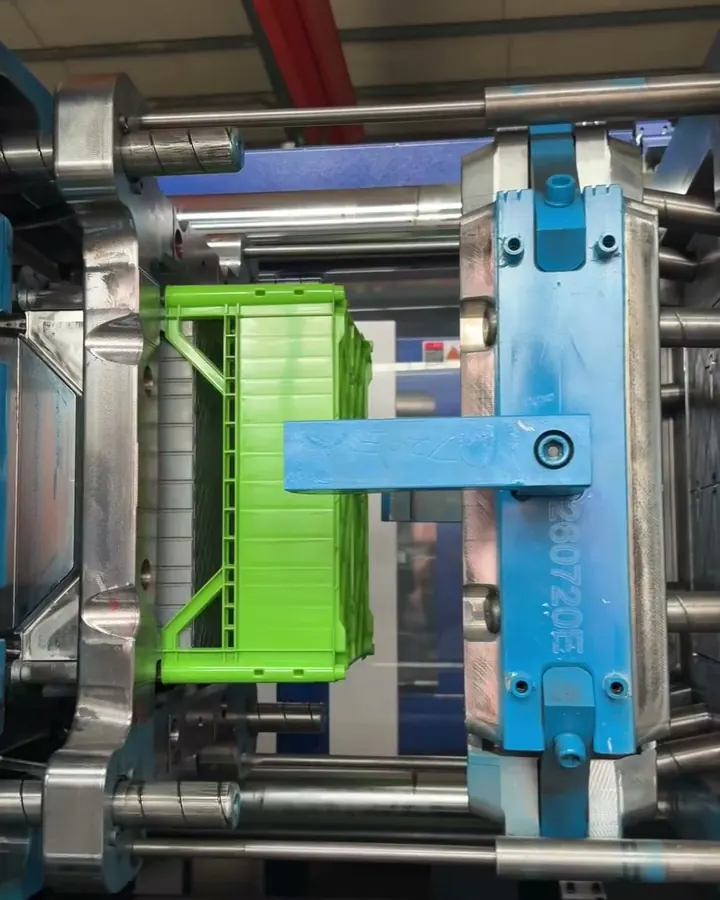
Both processes hide their main defects inside the wall, so an approval that only looks at the outside can pass a bad part. Ask for one sample cut open through its thickest section.
| Check | What a problem looks like | Usual direction of the fix |
|---|---|---|
| Foam part, cut through the thick wall | Plastics Technology describes the target as a dense skin over a cellular core. Large voids or a skin thinning at corners mean the foaming is not under control. | Shot size and blowing-agent level adjusted, then re-sectioned |
| Gas part, cut along the gas channel | Moldex3D describes fingering as gas branching out of the intended channel in finger shapes, which reduces stiffness and impact strength. | Gas entry position and timing revisited, ideally simulated before steel changes |
| Visible face of a foam part | Swirl or splay across the skin | Paint, a molded-in texture, or gas counterpressure, where the mold is pressurized with gas before injection for a smoother skin |
| Weight of consecutive shots | Drift between shots: foam density or gas penetration is changing | Process held until weights settle; compare with the solid weight from the part weight calculator for the real saving |
Keep the sectioned sample as the reference: a later lot whose section looks different has changed, even if its outside has not.
Sources for this section:
- Plastics Technology: No. 13 - Structural Foam
- Moldex3D: Predicting gas fingering behaviors using 3D GAIM simulation
Common questions
What are structural foam and gas-assist molding?
Injection-molding variants for large/thick parts where a thick solid wall would sink, warp, and need heavy clamp. Structural foam foams the core (solid skin + cellular core) at low clamp; gas-assist hollows thick sections with nitrogen so they don't sink. Both make big, stiff parts conventional molding handles poorly.
What is structural foam good for?
Large rigid parts where weight/stiffness beat surface gloss — enclosures, pallets, machine covers, housings, panels. Low clamp (big part on a smaller press), little sink/warp, high stiffness-to-weight. Trade-off: a swirl surface (paint/texture to hide), thicker walls, longer cycle.
What is gas-assist good for?
Thick sections, heavy ribs, tubular features — a thick handle, a chair base, a ribbed panel, a bezel — rigid and light without sink. Less material, often a shorter cycle, lower clamp, better surface than foam. Catch: gas channels need careful design and control (blowout/fingering is the failure mode).
Which should I use?
Structural foam for a large, uniformly thick, rigid part with an acceptable textured/painted surface. Gas-assist for localized thickness (ribs, bosses, tubular) or a better surface. A thin uniform part needs neither — conventional molding. Don't add foam/gas to a part that doesn't need it.
What do you need to recommend a process?
Size/geometry (model or drawing), wall thickness and where the thick sections are, stiffness/weight targets, surface requirement (hidden structural vs visible cosmetic), and annual volume. The surface requirement is often the deciding factor.
JCH Design & Manufacturing can recommend conventional, structural foam, or gas-assist for your part. Send the size, wall thickness, and surface requirement.
Book a 30-minute call