PBT or PET: which polyester fits my molded part?
Choose PBT for most connectors, housings and electrical carriers: it crystallizes quickly in an ordinary 60 to 80 °C mold, and many grades list high tracking resistance. Choose glass-filled PET when the part needs more stiffness or must carry load between about 55 and 90 °C, and the molder can run a 120 to 140 °C tool and dry to 0.02%.
The difference behind every other difference: crystallization speed
PBT (polybutylene terephthalate) and PET (polyethylene terephthalate) are close relatives: semicrystalline polyesters that need hard drying and are mostly sold glass-filled. What separates them in the molding shop is how quickly the melt turns into crystals. Michael Sepe's two-part comparison in Plastics Technology explains that the greater spacing between the aromatic rings in PBT lets it crystallize far more efficiently, so a PBT part cannot normally be molded amorphous, while PET needs nucleating agents plus fillers or reinforcement to crystallize within a cycle.
That is why most PET molding grades are glass-filled, and unfilled molding grades are often nucleated, as Envalior's Arnite A04 900 is. It is also why the two want very different tools. DuPont's Crastin PBT molding guide says PBT "crystallizes rapidly" and molds anywhere from 30 to 130 °C. Envalior's instructions for unfilled Arnite A PET ask for a measured steel surface of 130 to 140 °C and warn that below 130 °C parts can stick because their skin has not crystallized.
Four named grades, side by side
The table uses four current datasheets: an unfilled PBT (Crastin S600F20 NC010, Celanese), a 30% glass PBT (Envalior's Arnite TV4 261, also sold as Pocan B3235), an unfilled nucleated PET (Arnite A04 900) and a 30% glass PET (Rynite 530 NC010, Celanese). Values are typical ISO results, dry as molded.
| Property (test) | PBT: Crastin S600F20 | PBT-GF30: Arnite TV4 261 | PET: Arnite A04 900 | PET-GF30: Rynite 530 |
|---|---|---|---|---|
| Density | 1.31 g/cm³ | 1.53 g/cm³ | 1.37 g/cm³ | 1.56 g/cm³ |
| Tensile modulus (ISO 527) | 2,500 MPa | 9,750 MPa | 2,800 MPa | 11,000 MPa |
| Deflection temperature, 1.8 MPa (ISO 75) | 50 °C | 210 °C | 80 °C | 220 °C |
| Deflection temperature, 0.45 MPa | 120 °C | 220 °C | 90 °C | 240 °C |
| Glass transition (ISO 11357) | 55 °C | not listed | not listed | 90 °C |
| Melting point (ISO 11357) | 225 °C | 225 °C | 255 °C | 252 °C |
| Notched Charpy, 23 °C (ISO 179/1eA) | 5.0 kJ/m² | 10 kJ/m² | 3 kJ/m² | 11 kJ/m² |
| Water taken up: 50% RH air / immersion (ISO 62 or similar) | 0.20% / 0.40% | 0.1% / 0.3% | 0.2% / 0.5% | 0.20% / 0.70% |
| Mold shrinkage, along / across flow | 1.7 / 1.6% | 0.4 / 1.1% | 1.7 / 1.7% | 0.20 / 0.80% |
| Comparative tracking index (IEC 60112) | 575 V | 400 V | given only as UL 746A class PLC 1 | 250 V |
| Electric strength (IEC 60243-1) | 26 kV/mm | 30 kV/mm | not listed | 32 kV/mm |
Three things stand out. First, unfilled grades lose load-bearing ability early: at 1.8 MPa the PBT deflects at 50 °C and the nucleated PET at 80 °C, near their glass transitions, where Sepe notes both lose a little more than half their stiffness. Glass lifts those figures to 210 and 220 °C. Second, the glass PET is stiffer, by about 13% on these two sheets (11,000 against 9,750 MPa); Sepe puts the usual gap near 20%. Third, the unfilled grades shrink about evenly, while the glass grades shrink 2.75 times (PBT) and 4 times (PET) as much across the flow as along it. That anisotropy, more than the resin family, decides whether a long housing comes out flat. Humidity uptake is low for all four, 0.1 to 0.2% at 50% RH.
Why PET needs a hot mold and PBT does not
A semicrystalline melt can only organize into crystals while it is above its glass transition, and in the cavity it is cooling toward the steel, so the steel decides how long the chains have. Sepe calls PET's higher Tg "a double-edged sword": better performance at temperature, but a critical cooling rate, worst in thin walls. PBT's lower Tg (55 °C on the Crastin S600F20 sheet against 90 °C on the Rynite 530 sheet) is, in his words, a disadvantage for the end user but easier for the processor. The makers' settings follow:
- PBT. Crastin: 30 to 130 °C, about 80 °C for low post-mold shrinkage, over 100 °C for precision parts that will run hot. BASF's Ultradur brochure: 40 to 80 °C unreinforced, 60 to 100 °C reinforced, at least 80 °C for a good glass-filled surface, all reachable with water. Grade sheets narrow it: 40 to 70 °C for Ultradur B4520, 66 to 88 °C for Valox 420.
- Glass-filled PET. Rynite 530 sheet: 120 to 140 °C, optimum 130 °C. The Rynite guide's preferred minimums fall with wall thickness: 110 °C at 0.75 mm, 105 at 1.5 mm, 100 at 3 mm, 90 at 6 mm, and 30 °C more for its high-temperature electrical (HTE) grades.
- Unfilled PET. Arnite A (Envalior's molding recommendations, published with grade A02 307 and written for all unfilled Arnite A grades): 130 to 140 °C measured at the steel, in uniformly heated tools, since overheated spots stick too.
Run a PET tool cool and the trouble is delayed. The Rynite guide says parts molded at 60 to 85 °C show less initial shrinkage and warp but move more once heated above about 85 to 90 °C, as crystallization finishes in service. Sepe recounts a molder whose lower-cost PET, run too cool to crystallize fully, failed fatigue tests at 85 °C. Watch for PET parts that pass first article and move after a bake.
What a 130 °C mold changes in the tool
An 80 °C tool and a 130 °C tool are built differently, and the difference belongs on the tooling quote, not in the first trial report.
- Heating medium. An unpressurized water circuit cannot run above 100 °C, so a PET tool needs a pressurized-water or oil controller. The Rynite guide asks for one "with suitable pressure, heating and cooling capacity" and less than 5 °C between inlet and outlet fluid.
- Insulation. The same guide calls for insulating plates between mold and machine, and for large molds above 100 °C, insulated outside walls as well, so the platens do not drain heat unevenly.
- Circuits. It prefers separate or serial circuits in multi-cavity tools, since parallel channels can choke and leave cavities at different temperatures, and separate control in slides and core pulls where possible.
- Measurement. Envalior recommends a proper measuring device or built-in sensors; the setpoint is not the steel temperature.
- Wear. Envalior specifies the abrasion-resistant steels normally used for glass-filled resins. See glass-filled engineering resins.
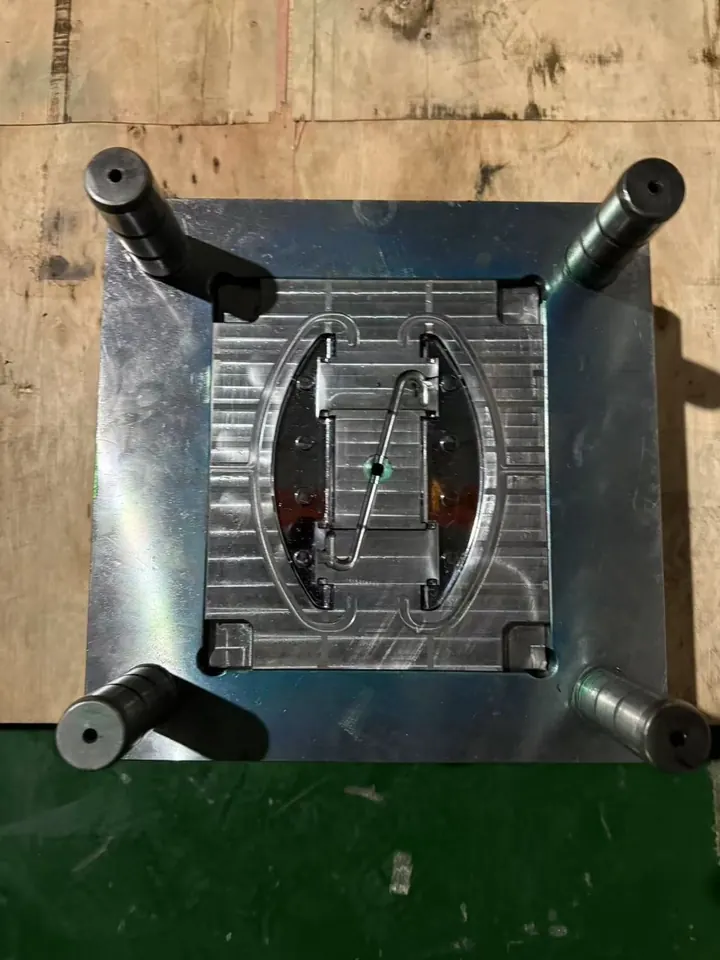
A PBT tool usually runs on an ordinary water controller, one reason PBT is the default for small, high-volume electrical parts.
Drying: the same dryer, tighter limits for PET
Both polyesters hydrolyze in the melt: water left in the pellets cuts the chains inside the barrel. BASF notes the damage shows mainly as lost impact strength and elasticity. Sepe adds that the reaction is slow in a solid part but takes minutes in the melt, and that PET reacts faster and tolerates less water.
| Setting | PBT (Crastin guide and S600F20 sheet) | PBT-GF30 (Valox 420 sheet) | PET-GF30 (Rynite guide and 530 sheet) | Unfilled PET (Arnite A instructions) |
|---|---|---|---|---|
| Most water allowed at molding | 0.04% | 0.020% | 0.02% | below 0.015%; 0.005 to 0.008% for best properties |
| Dryer air temperature | 110 to 120 °C | 121 °C | 120 to 135 °C (110 °C minimum) | 100 to 120 °C |
| Time for fresh resin | 2 h at 120 °C, 4 h at 110 °C | 3 to 4 h, 12 h maximum | 4 h at 120 °C, 2 h at 135 °C | 3 to 6 h as delivered |
| Regrind or wet resin (dryer temperature as above) | 4 h regrind, 6 h wet | not listed | 4 h regrind, 7 h wet | 3 to 12 h for an opened bag |
| Dryer dew point | −20 °C or lower | not listed | −20 °C or lower | −30 to −40 °C |
BASF also uses 0.04% for Ultradur, but Sepe notes newer PBT literature has moved from 400 to 200 ppm, the 0.020% on SABIC's Valox 420 sheet; follow the sheet for the exact grade. PET is not harder to dry, he adds; desiccant dryers bring both down at about the same rate. It just suffers more when molded wet.
The defect to fear is the one that looks good. The Rynite guide warns that wet polyester flows more easily, can overpack and flash, and gives a glossier, resin-rich surface, so "poorly molded parts may display excellent surface appearance and yet have poor end-use performance." Degraded regrind should be scrapped. Keep the dryer log and a degradation check in the process record: BASF's B4520 sheet treats a viscosity loss under 10% from pellet to part as tolerable. More in drying hygroscopic resins.
Two handling rules belong in the work instruction. BASF measured that a 25 kg bag stored at 5 °C took 48 hours inside to reach 20 °C; open it cold and water condenses on the pellets. The Rynite guide rules out tray ovens feeding an open hopper, because dried PET regains water quickly.
Shrinkage, warp and glass fiber
Unfilled PBT and PET shrink about equally in every direction, 1.6 to 1.7% on the sheets above. Glass cuts shrinkage along the flow, where fibers line up, but not across it. The Crastin guide says a real part lands anywhere between the two figures, depending on how the cavity fills.
BASF's brochure puts a number on the warp. In a test box with 1.5 mm walls molded at 80 °C, a glass-filled PBT (Ultradur B4300 G4; 20% glass by BASF's grade code) shrank 0.42% along the flow and 1.25% across and warped 1.0 mm; the low-warp S 4090 G4 shrank 0.25% and 0.67% and warped 0.3 mm. PET has low-warp glass/mica grades too, Rynite 935 and 940. Gating and wall fixes are in why molded parts warp; values for other resins in mold shrinkage by resin.
Post-mold shrinkage is the other half. In BASF's chart for unfilled B4520 with a 2 mm wall, parts from a 30 °C mold show about 0.7% shrinkage one hour after molding but about 1.7% after 24 hours at 120 °C. As mold temperature rises the curves converge near 2.0% at about 125 °C, with almost nothing left to happen later. The figures are read from a chart, but the lesson is firm: a cold mold makes a part that keeps shrinking in a hot product. On the 107 mm dimension BASF measured, one extra percentage point is 107 × 0.01 = about 1.1 mm.
Worked example: a 60 mm glass-filled connector housing
Take a hypothetical housing 60 mm long with 2 mm walls, gated at one end so the glass lines up along the length, in PBT-GF30 (Arnite TV4 261) or PET-GF30 (Rynite 530). The press uses 10 kg of resin per hour.
1. Cavity length. With datasheet shrinkage along the flow, the cavity is 60 × 1.004 = 60.24 mm for the PBT (0.4%) and 60 × 1.002 = 60.12 mm for the PET (0.20%). If the fibers end up crossways, the same length shrinks 60 × 0.011 = 0.66 mm in PBT and 60 × 0.008 = 0.48 mm in PET instead of 0.24 and 0.12 mm. The uncertainty from fiber direction, 0.42 mm for PBT and 0.36 mm for PET, is three or more times the 0.12 mm gap between the resins. So glass-filled cavities are usually cut steel-safe and corrected after the first trial, and moving a tool between the two resins is a steel change. The plastic shrinkage calculator repeats this for any dimension.
2. Dryer size. DuPont's guides call for 3.0 to 3.7 m³ of dry air per kg/h of resin: 30 to 37 m³/h here for either resin. The hopper must hold the full drying time: at 120 °C fresh PET needs 4 h, so 10 × 4 = 40 kg; fresh PBT needs 2 h by the Crastin guide (10 × 2 = 20 kg), but SABIC's Valox 420 glass-PBT sheet asks 3 to 4 h (30 to 40 kg); with regrind both DuPont guides call for 4 h, so plan 40 kg either way. The resin drying calculator does the same arithmetic.
3. Hold time. The guides estimate hold time from wall thickness: 2.5 to 3.5 s per mm for reinforced Crastin PBT, 3.0 to 4.0 s per mm for Rynite PET. For 2 mm that is 5 to 7 s against 6 to 8 s. The PET tool also runs 50 °C hotter (130 °C optimum on the Rynite 530 sheet, 80 °C on BASF's B4300 G6 HR sheet), so confirm cooling time at the trial.
Result: PBT-GF30 is the simpler job, with a water-heated tool, possibly a shorter drying time, and a higher tracking index (400 against 250 V). PET-GF30 earns its extra handling if the part needs the stiffness or carries load between about 55 and 90 °C, where PBT has passed its glass transition and PET has not. DuPont's Rynite guide makes the same pitch, claiming glass PET beats PBT on strength, stiffness and thermal endurance.
Electrical parts: tracking and flame-retardant grades
Where conductors sit close together on a plastic surface, the comparative tracking index (CTI, IEC 60112) matters as much as strength: it is the voltage at which a wet, contaminated surface starts to form a conductive path. In the table, the unfilled PBT lists 575 V, the glass PBT 400 V and the glass PET 250 V. SABIC's Valox 420, another glass PBT, lists 300 V. BASF quotes CTI 600 for a 15% glass hydrolysis-resistant PBT, and the Rynite guide lists 530HTE and 550HTE as its high-temperature electrical grades. If creepage distances on a drawing assume a CTI, write the minimum value on the drawing, not just "PBT".
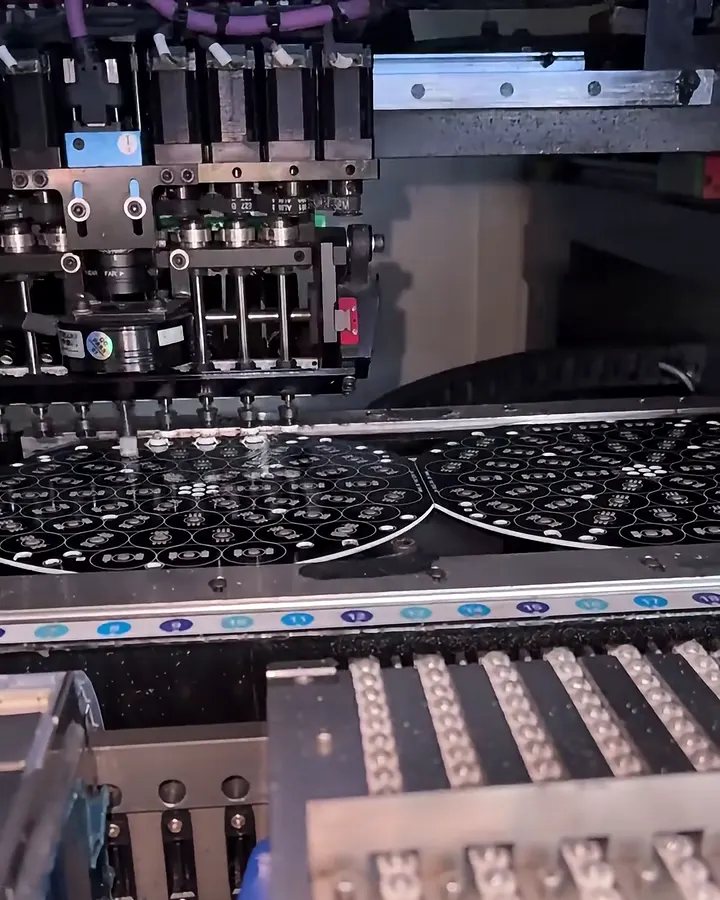
Both families come in flame-retardant versions. SABIC describes Valox 420SE0 as a brominated flame-retardant 30% glass PBT, the Rynite FR530 sheet describes a 30% glass flame-retardant PET, and each states its UL 94 class at given thicknesses; BASF lists flame-retardant Ultradur grades, some halogen-free, for connectors, coil formers and lighting parts. A rating belongs to one grade, color and thickness; check the UL file. UL 94 flame ratings explains how to read one.
Hydrolysis in service: heat plus humidity is the real test
BASF's brochure explains that water, even as humidity, splits polyester chains at elevated temperature. At room temperature PBT resists water and most salt solutions, and brief hot-water contact is not a problem, but BASF rates it not resistant to aqueous alkalis and recommends its HR grades for long exposure. In its 85 °C, 85% humidity test on 4 mm bars, a 30% glass PBT without stabilization fell from above 120 MPa tensile strength to under 40 MPa in roughly 2,000 hours, while the stabilized B4330 G6 HR still held about 100 MPa near 5,000 hours (read from the chart). A part that sits warm and damp, such as an under-hood connector, should be quoted in a stabilized grade: BASF's HR range for PBT, or for PET, Rynite HR540SUV, a 40% glass grade listed for UV and hydrolysis resistance. For acids and solvents, see chemical resistance by resin.
Typical parts in each
BASF's PBT examples are mostly electrical and automotive: plug-in connectors, sensors, control-unit and switch housings, circuit breakers, coil formers, lighting parts, wiper arms and headlamp structures. DuPont pitches Rynite PET where PBT runs short: replacing die-cast metal and thermosets, encapsulation, thin-wall electrical parts and ignition parts (its RE5329 grade).
Checklist before you choose
- Load and temperature. Unfilled PBT deflects at 50 °C under 1.8 MPa. Above that, go glass-filled; between about 55 and 90 °C under load, glass PET keeps more stiffness.
- Heat plus humidity. Name a hydrolysis-stabilized grade on the drawing.
- Flatness. For long glass-filled parts, ask for a fill simulation showing fiber orientation, or start with a low-warp grade.
- Mold temperature. For PET, confirm the tool can hold 120 to 140 °C at the steel.
- Drying. Put moisture limit, dew point and residence time in the process sheet.
- Post-mold shrinkage. For hot-running parts, bake first-article samples (BASF used 24 hours at 120 °C) and measure before and after.
When the answer is neither
If the part is a gear, latch or slide rather than a housing, compare nylon and acetal. If 30% glass PET still is not stiff or hot enough, choosing the right resin lays out the next candidates, and the plastic material selector narrows the field before grade names.
Common questions
Is PBT or PET better for electrical connectors?
PBT is the usual choice. It molds in a water-heated tool, crystallizes fast in thin walls, and on the datasheets compared here lists a higher tracking index (575 V unfilled, 400 V with 30% glass) than a standard 30% glass PET (250 V). Glass PET fits connector bodies that need more stiffness or must carry load between about 55 and 90 °C.
Can a mold built for PBT run PET?
Only after checking the tool. PET grades want the steel near 120 to 140 °C, which needs pressurized water or oil and insulation plates, while many PBT tools run on water at 60 to 80 °C. Shrinkage differs too, 0.4% against 0.20% along the flow for the two glass grades here, so cavity sizes change.
Why do my polyester parts look glossy but break easily?
Suspect wet resin first. DuPont's Rynite guide notes that excess moisture lowers melt viscosity and gives polyester a glossier, resin-rich surface while cutting toughness. Check pellet moisture (0.02% maximum for glass PET) and dryer dew point (−20 °C or lower), then mold temperature, since a cold tool also leaves PET under-crystallized.
Do PBT and PET parts swell with humidity like nylon?
Very little. The four datasheets here list 0.1 to 0.2% water uptake in 50% humidity air and 0.3 to 0.7% after immersion, far less than nylon. The water risk for polyesters is chemical: hot, humid service splits the chains by hydrolysis, which is why hydrolysis-stabilized grades exist.
What does nucleated mean on a PET datasheet?
A nucleating agent gives crystals many starting points, so the resin crystallizes fast enough to finish inside a molding cycle. Sepe notes PET needs nucleating agents plus fillers or reinforcement to do that. Envalior sells Arnite A04 900 as a nucleated unfilled PET, and still calls for a 130 to 140 °C mold surface for Arnite A grades.
Sources
- Celanese - Crastin S600F20 NC010 unreinforced PBT datasheet (Formerra copy hosted by Protolabs)
- Envalior - Arnite TV4 261 (Pocan B3235 S800) PBT-GF30 property data
- Envalior - Arnite A04 900 nucleated PET property data
- Envalior - Arnite A02 307 recommendations for injection molding (Arnite A PET grades)
- Celanese - Rynite 530 NC010 PET-GF30 datasheet (Formerra copy hosted by Protolabs)
- DuPont - Rynite PET thermoplastic resins Molding Guide
- DuPont - Crastin PBT thermoplastic resins Molding Guide
- DuPont - Rynite PET product reference guide (copy hosted by Formerra)
- DuPont - Rynite FR530 NC010 product information (copy hosted by CERN)
- BASF - Ultradur (PBT) product brochure
- BASF - Ultradur B 4520 processing data sheet
- BASF - Ultradur B 4300 G6 HR processing data sheet
- SABIC - Valox 420 PBT-GF30 technical data (UL IDES copy hosted by Protolabs)
- SABIC - Valox FR 420SE0 technical data (UL Prospector copy hosted by Protolabs)
- Plastics Technology - M. Sepe, PBT and PET Polyester: The Difference Crystallinity Makes
- Plastics Technology - M. Sepe, PBT & PET Polyester: Part 2, The Performance Factor
Send the part file and the quantity you expect to run, and we'll review it before you commit to tooling. NDA first if you want one.
Send a part for reviewBook a 30-minute call