Polypropylene or polyethylene (HDPE/LDPE) for a molded part: which fits, and what changes in the tool?
Choose polypropylene when a part runs warm, needs a living hinge, or must stay stiff at the lowest weight. Choose HDPE when it must take impact below freezing, and LDPE when it should be soft and squeezable. The tool is not interchangeable: PE usually shrinks more than PP, the LDPE grade here shrinks differently along and across the flow, and HDPE wants a colder mold.
Two olefins that look alike and fail differently
Polypropylene and polyethylene are both polyolefins: waxy, light enough to float, unbothered by water, and common in caps, crates, tubs and closures. Two unmarked white parts can be hard to tell apart. The differences show up at the edges: on a hot shelf, in a freezer, at a fold that has to open a thousand times, or against a tight tolerance.
Each name covers a family. HDPE is the stiff, tough polyethylene of crates, pails and bins; LDPE is the soft, squeezable one. Polypropylene homopolymer is the stiffer version, and impact copolymer trades some stiffness for toughness, especially in the cold. So "PP or PE" is really a choice among at least four resins, and the numbers below use one real grade of each.
Four real grades, side by side
The values are typical properties from each maker's published data, not specifications. Test methods differ between makers (the HDPE flex value is a 1% secant figure, and the LDPE sheet reports a tensile modulus on compression-molded plaques), so read close numbers as "about equal", not as a ranking.
| Property | PP homopolymer (LyondellBasell Moplen HP500N) | PP impact copolymer (Moplen EP500N) | HDPE (LyondellBasell Alathon M6580) | LDPE (Dow 780E) |
|---|---|---|---|---|
| Density | 0.90 g/cm³ | 0.90 g/cm³ | 0.965 g/cm³ | 0.923 g/cm³ |
| Stiffness | flexural modulus 1,480 MPa | flexural modulus 1,150 MPa | flexural modulus (1% secant) 1,650 MPa | tensile modulus (2% secant) 164 MPa |
| Strength at yield | 34 MPa | 27 MPa | 32.1 MPa | 8.2 MPa |
| Notched Izod at room temperature | 25 J/m | 100 J/m | 36 J/m | not listed |
| Cold toughness | not listed | notched Izod 50 J/m at −20 °C | brittleness temperature (F50) −72.8 °C | not listed |
| Heat deflection at 66 psi (0.46 MPa) | 97 °C | 110 °C | 82.8 °C | not listed; Vicat softening 93 °C |
| Mold shrinkage | 1.38 to 1.63% measured on 4 mm bars (research study) | not listed | not listed; Dow 25055E HDPE lists 2.1% along flow | 2.3% along flow, 1.5% across (ASTM D955) |
| Supplier starting mold temperature | 15 to 50 °C (Formosa polypropylene guide) | 50 to 70 °F, about 10 to 21 °C (INEOS HDPE tips) | 10 to 50 °C (Dow 780E) | |
Three things jump out. First, at room temperature a stiff HDPE and a PP homopolymer are much closer than their reputations suggest: 1,650 against 1,480 MPa. Second, LDPE is in a different class: roughly a tenth as stiff (by a different test) with about a quarter of the yield strength. Third, the copolymer pays for its toughness: it gives up about a fifth of the homopolymer's flexural stiffness to get four times the room-temperature notched impact.
Heat and cold decide more choices than anything else
If a part sits near a heat source, goes through a hot wash, or carries load in a warm car, polypropylene is usually the safer starting point. The heat deflection numbers show why: under the same 66 psi (0.46 MPa) load, the PP homopolymer deflects at 97 °C and the impact copolymer at 110 °C, against 82.8 °C for the HDPE. The HDPE crystals melt at 133.4 °C on LyondellBasell's sheet, and Dow puts the softening point of the LDPE at 93 °C, so LDPE is the first of the group to give up when warm.
Cold flips the order. LyondellBasell's HDPE sheet gives a low-temperature brittleness point of −72.8 °C, the temperature at which half the test specimens break on impact. PP homopolymer datasheets rarely publish a cold value at all, and the living-hinge design notes cited below advise impact copolymer whenever a PP part needs impact resistance in the cold. Even the copolymers lose a lot: EP500N halves from 100 to 50 J/m between room temperature and −20 °C, and Formosa's Formolene 6630A copolymer drops from 534 J/m at 23 °C to 69 J/m at −30 °C. For a crate dropped on a loading dock in winter, or a part that lives in a freezer, HDPE starts ahead. For a lid that has to survive a hot dishwasher, PP starts ahead.
Fatigue: the living hinge is polypropylene's signature
A living hinge is a thin web of plastic that joins two rigid sections and bends instead of a pin. Polypropylene is the classic choice because the web cold-draws on its first flexes: the chains line up across the fold and the web gets much stronger. A set of living-hinge design notes hosted by MIT describes a hinge in 4 melt-flow PP homopolymer that was flexed through 180° 300,000 times at 23 °C, another 300,000 times at −28 °C, and a further 300,000 at room temperature with no failure, and says testing on well-made homopolymer hinges was usually stopped at about a million cycles rather than run to failure.
Those same notes rank homopolymer and random copolymer ahead of impact copolymer for hinge life, and warn that high-aspect fillers such as talc, mica or glass fiber give very poor hinges. So on some parts the copolymer that survives a cold drop makes the weaker hinge. Protolabs names both polyethylene and polypropylene as suitable hinge materials and calls LLDPE an excellent choice for the hinges on many containers. The long-cycle test data in the sources behind this page, though, is all for PP. If the hinge has to last for the life of the product, start with PP and treat a PE hinge as something to prove by test. Design rules are on our living hinge page; the tooling side is below.
Chemicals and stress cracking
Both resins resist water and most acids, bases and household chemicals. The trap for polyethylene is environmental stress cracking: a snap, press-fit boss or threaded cap under constant strain can crack when it meets a surfactant that leaves an unstressed part alone. Polyethylene grades are rated with ASTM D1693, reported as hours until half the bent strips crack in a surfactant, and grades differ widely. Dow's 25055E, an easy-flow HDPE for housewares, lists 0.7 h in 100% surfactant (Antarox CO-630). Dow's DMDA-8904, an HDPE intended for pails and shipping containers, lists 22 h in 100% IGEPAL. The LDPE 780E lists 1.40 h, without the reagent strength stated.
The practical rule: if a PE part will be stressed and in contact with soaps, detergents or wetting agents, pick a grade with a high published stress-crack value and confirm it with your actual chemical. D1693 is written for ethylene plastics, so polypropylene datasheets don't carry that number. The broader mechanism, and how to test for it, is on the stress cracking page.
Weight and food contact
Polypropylene is the lightest of the four grades at 0.90 g/cm³. The HDPE in the table is 0.965, so the same part volume weighs 0.965 ÷ 0.90 = 1.072 times as much, about 7% more resin per shot. The LDPE is 0.923, about 2.6% heavier than PP. Resin is bought by weight, so that gap goes straight into material usage.
Food-contact grades exist in all three families, but the claim belongs to a specific grade, not to "PP" or "PE". LyondellBasell describes HP500N as suitable for food contact, and Dow states that 780E should comply with 21 CFR 177.1520, the federal regulation for olefin polymers, when used unmodified. Dow's 25055E HDPE sheet likewise lists 21 CFR 177.1520. A colorant or additive can change that, so get the compliance statement for the exact grade and masterbatch. What that paperwork covers is on our food-safe and medical-grade molding page.
What changes in the tool
This is the part most comparison articles skip. PP and PE run on the same presses at similar melt temperatures (Formosa's polypropylene guide starts at 200 to 250 °C, and INEOS suggests 400 to 430 °F, about 204 to 221 °C, for HDPE), and neither normally needs drying: INEOS states that pre-drying is not necessary for HDPE, and Formosa's guide lists drying only as a fix for splay. The tool, though, is cut for one of them.
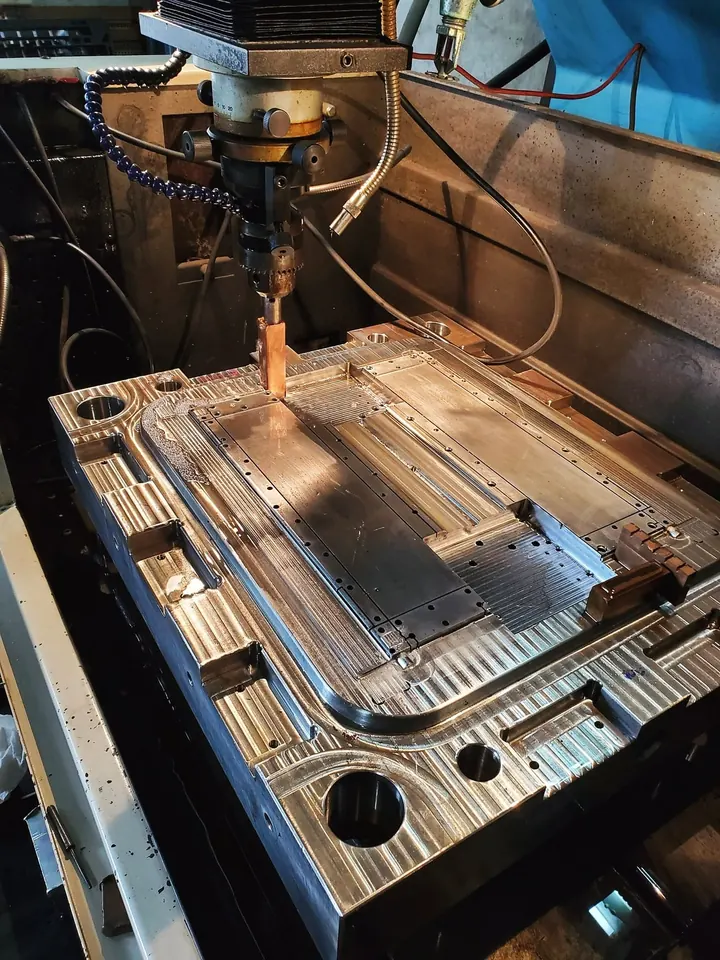
Shrinkage sets the steel size
Both are semicrystalline, so both shrink well beyond an amorphous resin, and the cavity is enlarged by the expected shrink before steel is cut. RTP's part design guide gives typical shrinkage on a 3.2 mm section of 1.0 to 2.5% for unfilled PP and 1.5 to 4.0% for HDPE. Single grades sit inside those bands: Dow lists 2.1% along the flow for 25055E HDPE, and 2.3% along the flow with 1.5% across it for 780E LDPE. That last pair matters. Even an unfilled polyethylene shrinks about half again as much in one direction as the other, and on a large flat lid that difference turns into bow. The site's mold shrinkage page explains how shrink is measured and corrected in general; here the point is that PE's numbers are usually higher and more directional than PP's.
Shrinkage also keeps moving after the part leaves the press. A study by Kościuszko, Marciniak and Sykutera molded 4 mm bars of Moplen HP500N in a 168 mm cavity and measured them over time. With a 20 °C mold, shrinkage was 1.38% at 1 h and 1.56% at 504 h. With an 80 °C mold it started higher, 1.51%, and reached 1.63%. A warmer mold lets more crystals form in the mold, so the part starts smaller but drifts less afterward. Whoever measures first articles has to know which hour the drawing means.
Mold temperature and cooling
The supplier starting points differ. Formosa suggests 15 to 50 °C for its polypropylene, Dow 10 to 50 °C for 780E LDPE, and INEOS 50 to 70 °F for HDPE, which is about 10 to 21 °C. Holding steel at 10 to 21 °C means the water feeding it has to be colder still, so check what the press can supply before the cooling circuit is drawn. INEOS also warns that a shortened hold time on HDPE brings more warpage, sink, ejector-pin marks and shrinkage, which means cycle time on thick PE walls is set by cooling, not by how fast the press can move. The mold cooling page and the cooling channel calculator cover the channel layout side.
Warpage, walls and draft
Large flat PE parts are the classic warpage problem: high shrink, different along and across the flow, and sensitive to any difference in cooling between the two halves of the mold. Protolabs' HDPE guidelines call for draft of at least 1° per side and uniform walls of at least 1.5 mm. Ribs, gate position and balanced cooling do more for flatness than any process tweak; see why molded parts warp for the mechanism. Talc-filled PP shrinks less, 0.7 to 1.5% in RTP's table, which helps big flat parts, but talc is one of the fillers the hinge notes warn against.
Gating, and the hinge as a tool feature
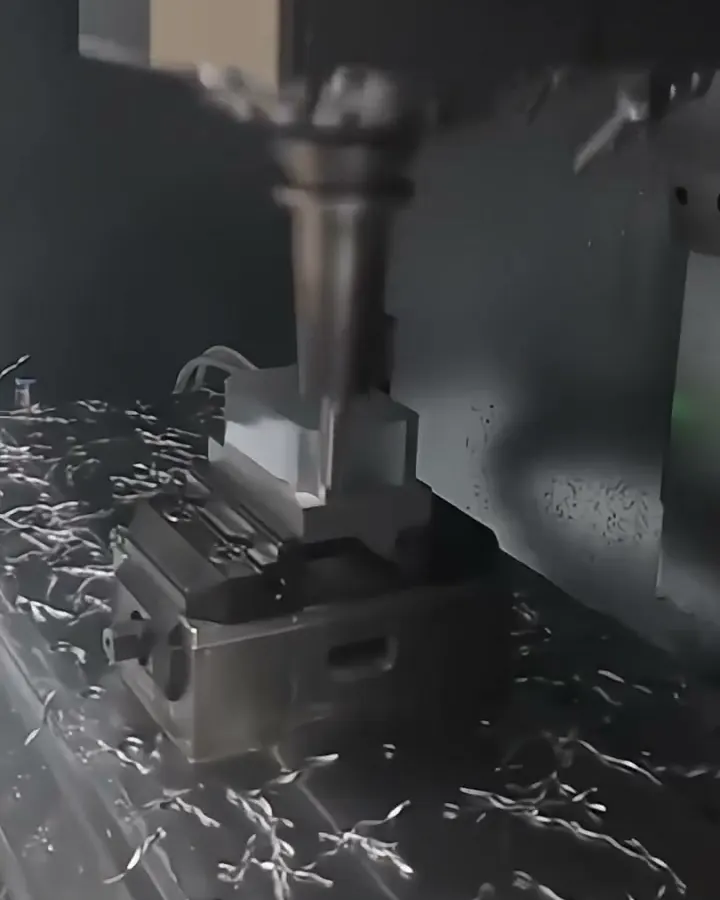
For a hinged PP part, the gate location is part of the hinge design. The MIT-hosted notes say the cavity must fill so the melt crosses the hinge at right angles in one uninterrupted pass. If the melt reaches the web too early, it stalls there, then crosses from both ends and leaves a weld line in the fold, where the hinge will split. Long hinges, over about 6 in (150 mm), are better broken into segments with gaps, and cooling lines should run parallel to the hinge and close to it on both sides. Protolabs' starting geometry is a 0.012 in (0.30 mm) web with about 0.060 in (1.5 mm) of land, a 0.008 in (0.20 mm) recess on the fold side, and a 0.030 in (0.76 mm) radius on the side that stretches.
The hinge web is also the one place where "steel-safe" runs in the opposite direction from most features. A thicker web means removing steel, so the notes recommend cutting it at 0.008 to 0.010 in (0.20 to 0.25 mm) and opening it up after trials if needed, to a maximum of 0.015 in (0.38 mm). Below about 0.20 mm the web causes shear heating and short shots. Parts are then flexed a few times while still warm off the press. Gate styles themselves are compared on the gate types page.
Worked example: one hinged box, three resins
Take a hypothetical hinged box, 120.00 mm long in the flow direction and 80.00 mm wide across it. The tool is built for PP homopolymer at an assumed 1.5% shrink, inside the 1.38 to 1.56% the study measured with a 20 °C mold. Treat the percentages as illustrations: the study used 4 mm bars, and a thinner wall behaves differently.
Steel size for PP. Cavity length = 120.00 ÷ (1 − 0.015) = 121.83 mm. Cavity width = 80.00 ÷ 0.985 = 81.22 mm.
When you measure matters. Using the study's 20 °C figures, a part measured 1 h after molding is 121.83 × (1 − 0.0138) = 120.15 mm long. At 504 h it is 121.83 × (1 − 0.0156) = 119.93 mm. The same part moved 0.22 mm on the bench. Against ±0.15 mm it sits right on the upper limit at 1 h. Against ±0.10 mm the 1 h measurement fails and the 504 h measurement passes, so the verdict depends on when the inspector picks the part up.
Switching the same tool to HDPE. At Dow's 2.1% flow shrink for 25055E: 121.83 × (1 − 0.021) = 119.27 mm, so the box comes out 0.73 mm short. To hit 120.00 mm in HDPE, the cavity would have needed to be 120.00 ÷ 0.979 = 122.57 mm, which is 0.74 mm longer than the PP steel. Enlarging a cavity is machining; shrinking one means welding or a new insert.
Switching to LDPE. With 780E's 2.3% along flow and 1.5% across: length 121.83 × 0.977 = 119.03 mm, which is 0.97 mm short, while the width 81.22 × 0.985 = 80.00 mm lands exactly on size. The part is not just smaller; it has changed shape, about 0.8% short in length and on size in width, so any insert, label or mating part sized for the PP version no longer fits the same way.
Weight. If the box holds 30 cm³ of plastic, it weighs 27.0 g in PP, 28.95 g in the HDPE from the table and 27.69 g in the LDPE.
Result. For this box, stay with PP homopolymer (or a random copolymer) unless a cold-drop requirement forces an impact copolymer, and if the resin ever changes, budget for steel work and a fresh first-article check. The plastic shrinkage calculator repeats this arithmetic for your own dimensions.
Checklist before the steel is cut
- What is the hottest and the coldest temperature the part will see in use, storage and shipping? Heat points to PP; deep cold points to HDPE or a PP impact copolymer.
- Is there a living hinge, and how many cycles does it need? Plan on PP homopolymer or random copolymer, with no talc or glass.
- Will the part be under constant strain while it touches soaps, detergents or oils? For PE, compare published ASTM D1693 hours between candidate grades.
- Is the exact grade fixed, including colorant, and is the flow direction known for each critical dimension? On PE the two directions can differ by half again.
- Is the measuring time written on the drawing or the inspection plan, given that PP bars kept shrinking out to 504 h?
- Does the mold-temperature range the resin maker suggests match the cooling water the press can supply? HDPE's suggested 10 to 21 °C needs water colder than that.
- For food contact, is there a compliance statement for the exact resin and masterbatch?
When neither is the right answer
If the part has to be clear, rigid and tough, neither olefin will do; the ABS vs polycarbonate vs polypropylene comparison covers that trade. If it has to stay stiff well above 110 °C, a filled PP or an engineering resin is the next step, and a filled grade gives up the hinge. If it lives outdoors, both need UV stabilization (see UV-resistant plastics for outdoor parts), and the plastic material selector is a quick way to see what else fits before you commit the tool to one resin.
Common questions
Can a mold built for polypropylene run HDPE or LDPE?
It will usually fill and eject, but the parts come out a different size. In the worked example above, a 120 mm box cut for PP at 1.5% shrink comes out about 0.73 mm short in HDPE at 2.1% and 0.97 mm short in LDPE at 2.3%, and the LDPE shrinks less across the flow. Plan for steel changes and a new first-article check.
Is PP or PE better for a living hinge?
Polypropylene in most cases. Published hinge tests on PP homopolymer ran to about a million cycles without failure, and homopolymer or random copolymer makes a better hinge than impact copolymer. Polyethylene, LLDPE in particular, can form a working hinge on softer containers, but prove its life with a cycle test on molded parts before committing the design.
Which is better for parts used in the cold or in a freezer?
HDPE starts ahead: LyondellBasell lists a brittleness temperature of −72.8 °C for Alathon M6580. If the part must be PP, use an impact copolymer and check its cold data. Moplen EP500N drops from 100 J/m notched Izod at room temperature to 50 J/m at −20 °C. PP homopolymer datasheets usually publish no cold impact value at all.
What is the practical difference between HDPE and LDPE in a molded part?
HDPE is rigid: Alathon M6580 has a flexural modulus of 1,650 MPa and softens (Vicat) at 131 °C. LDPE is soft and squeezable: Dow lists a tensile modulus of 164 MPa and Vicat softening at 93 °C for 780E. HDPE suits crates, pails and bins that carry load; LDPE suits flexible parts that are meant to bend or be squeezed.
Do PP and PE need drying before molding?
Normally not. INEOS states that pre-drying is not necessary for its HDPE resins, and Formosa's polypropylene guide lists drying only as a corrective step when parts show splay. Drying can still be needed if the resin, a masterbatch or regrind has picked up surface moisture in storage, so check the datasheet for the exact grade.
Sources
- LyondellBasell - Moplen HP500N PP homopolymer, typical properties
- LyondellBasell - Moplen EP500N PP impact copolymer, typical properties
- LyondellBasell - Alathon M6580 HDPE, typical properties
- Dow - LDPE 780E technical information (copy hosted by distributor Chemate)
- Dow - HDPE 25055E technical information (copy hosted by distributor Chemate)
- Dow - DMDA-8904 NT 7 HDPE product page (ESCR)
- Formosa Plastics - Formolene polypropylene injection molding process guidelines
- Formosa Plastics - Formolene 6630A impact copolymer datasheet
- INEOS Olefins & Polymers - Tips for injection molding HDPE resins
- RTP Company - Part design guidelines for injection molded thermoplastics (shrinkage table)
- Kościuszko, Marciniak, Sykutera - Post-processing time dependence of shrinkage of injection-molded polypropylene, Materials 14(1), 2020 (PMC)
- Protolabs - Living hinge basics for injection molding
- Design Issues on Living Hinges (polypropylene hinge design notes, hosted by MIT course 2.75)
- Protolabs - HDPE material guide (draft, wall and shrink guidance)
- Protolabs - Polypropylene or polyethylene? Evaluating two popular polymers
Send the part file and the quantity you expect to run, and we'll review it before you commit to tooling. NDA first if you want one.
Send a part for reviewBook a 30-minute call