

What is powder coating? A buyer's guide to the finish
Powder coating is paint applied as a dry, electrostatically charged powder and baked into a hard film. How the line runs, which powder suits which use, and the two tests that turn "powder coat, black" into a finish you can inspect.
Filed under Powder coating
Powder coating is a paint finish applied as a dry powder instead of a wet liquid. The powder is sprayed onto bare metal, then baked until it melts into one continuous film. That's the one-line answer. The rest of this note covers what a buyer needs to know before putting "powder coat" on a drawing: what the powder is, how a line runs, where a finish goes wrong, and what to write into the order so a coated part comes back the way you pictured it.
What is powder coating, exactly?
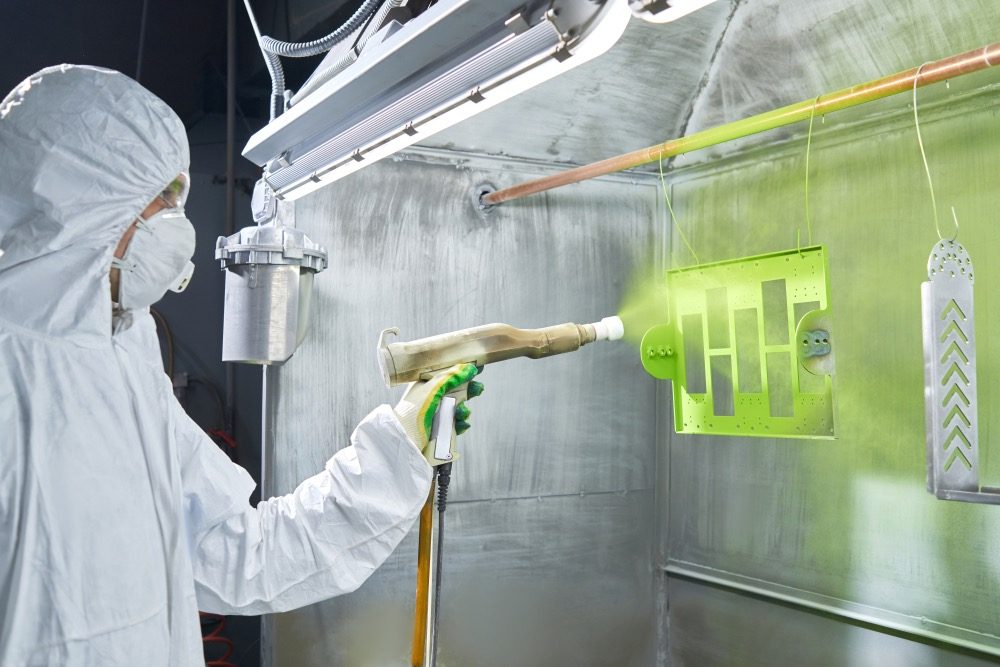
Products Finishing describes it as "a dry finishing process." The powder is finely ground resin and pigment, plus additives for things like gloss and hardness. A spray gun gives the powder an electrostatic charge as it leaves the tip. The part is grounded, so the charged powder is pulled onto it and held there "until melted and fused into a uniform coating in a curing oven."
Most industrial powders are thermosets. When they're heated they melt, flow and then chemically crosslink, so the cured film no longer softens when it gets warm again. Thermoplastic powders melt and flow too, but they don't crosslink. They're used for thicker functional coatings, often applied by dipping a hot part into a fluidized bed of powder.
For a buyer, the practical differences from liquid paint are these:
- No solvent. Products Finishing notes that because the powder contains no solvents, the process "emits negligible, if any, volatile organic compounds."
- Less waste. Overspray that misses the part can be collected and returned to the feed hopper.
- Fewer runs and sags. Powder is hard to make run, drip or sag, which cuts appearance rejects.
- A thicker, tougher film. Powder is usually chosen for a thick, durable finish on metal parts that see rough use, as the Wikipedia overview puts it.
It is not the right answer for everything. Powder needs heat to cure, so the part has to survive the oven. That rules out most plastics, rubber, and assemblies with electronics or adhesives already inside.
How a powder coating line runs
The order on a real line is hang, pretreat, dry, spray, cure and inspect. The powder coating page walks through each step with photos from the lines Jack's programs use. Two steps decide most of the result.
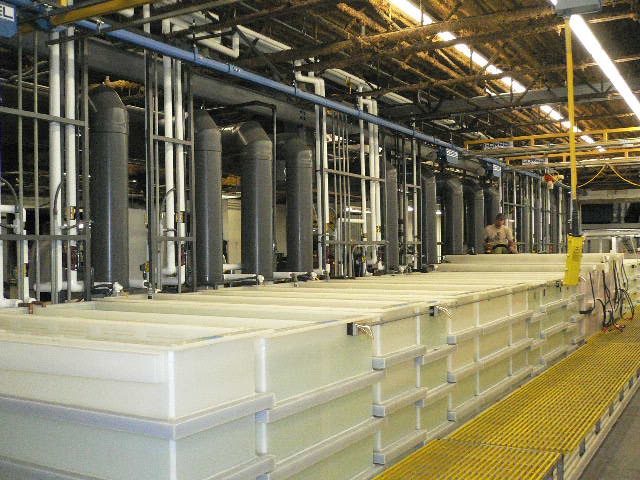
Pretreatment decides adhesion. Powder only holds as well as the metal under it was cleaned. Parts are degreased and rinsed, then usually given a conversion coating such as iron or zinc phosphate. In a Products Finishing Q&A on pretreatment, iron phosphate "works well with powder but has modest corrosion resistance if the coating is broken." Zinc phosphate "has very good corrosion resistance," but it needs waste treatment. Zirconium-based pretreatments are a newer alternative that doesn't make phosphate sludge. For parts that will live outdoors, the same answer points to a primer under the powder.
Cure decides everything else. Wikipedia gives a typical cure of about 200 °C (roughly 390 °F) for at least 10 to 15 minutes, and notes that the exact time and temperature depend on the part. That dependence matters. The temperature that counts is the metal's, not the oven air's, and a thick casting heats more slowly than a thin bracket on the same rack. An undercured film can look fine at the dock and then fail a solvent or impact test, or chip in the field.
Which powder: epoxy, polyester or a hybrid
Your drawing should name the chemistry as well as the color. Wikipedia describes three common families:
- Epoxy-polyester hybrids (resin ratios such as 50/50 or 70/30) are general-purpose powders for indoor use.
- Polyesters cured with TGIC or HAA hardeners are the usual outdoor choice.
- Fusion-bonded epoxy is a functional coating for pipe, valves and rebar. Products Finishing notes that film builds over 10 mils are common in those applications.
The detail buyers miss is that an indoor powder on an outdoor product looks perfect at inspection and only shows the problem months later. Epoxy-rich films chalk and fade in sunlight. If the product will sit on a patio, a truck or a job site, say so on the order.
What to check when coated parts arrive
Most powder coating problems can be found on a sample part before a lot ships, if someone knows what to measure. The two standard checks are simple:
- Film thickness. ASTM D7091 is the practice for measuring dry film thickness with magnetic and eddy current gauges on metal. Put a thickness range on the drawing. Without one, "coated" has no number to fail.
- Adhesion. ASTM D3359 covers the tape test: cut through the film, press tape over the cuts, pull it off and rate what comes away. Method B, the crosshatch, is intended for films under 5 mils, which covers most decorative powder. ASTM notes the test tells you whether adhesion is adequate. It doesn't rank one good coating against another.
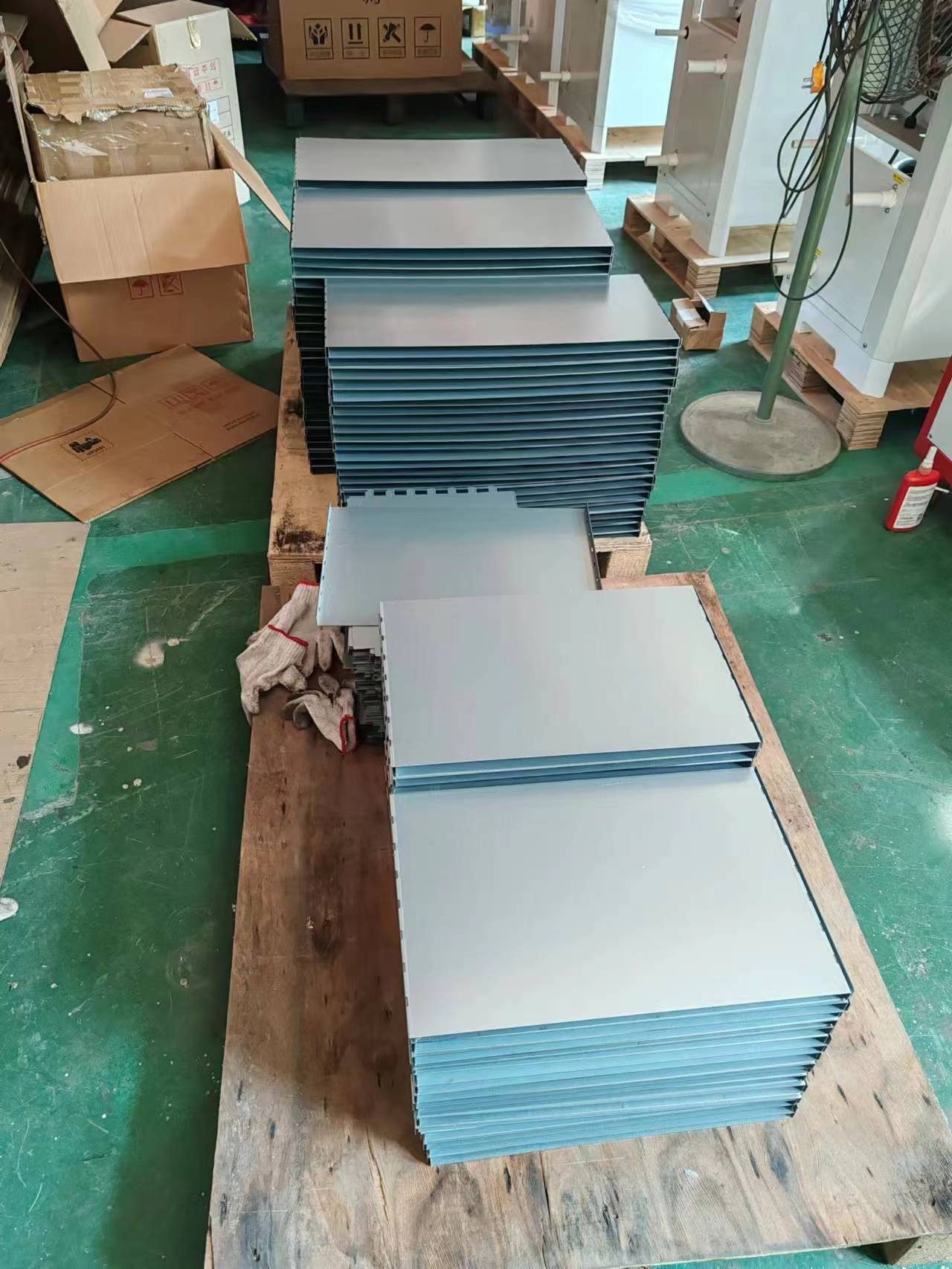
Add a visual standard on top: a color reference, a gloss level, and which faces are cosmetic. A mounting face hidden inside a cabinet doesn't need the same look as a front panel, and saying so keeps good parts from being rejected. Also mark every surface that must stay bare, such as threads, grounding points and mating faces, so the coater masks them before spraying.
This is the kind of thing line watch is for: measuring the first coated parts against the drawing on the floor, not after the lot has crossed an ocean. It is also where a finish most often drifts from the approved sample, for the reasons in the golden sample was perfect, lot three was not.
What to put on a purchase order for a powder-coated part
A short list covers most of it:
- Substrate and pretreatment: steel, galvanized or aluminum, and the pretreatment you expect.
- Powder type and use: indoor hybrid or outdoor polyester, plus any primer.
- Color and gloss: a named color standard and a gloss level, with a physical sample if color matters.
- Film thickness range: measured per ASTM D7091.
- Adhesion test: ASTM D3359, with the method and the minimum rating you'll accept.
- Masking: every surface that stays bare.
- Packing: how coated parts are separated so the film isn't scuffed in transit.
None of this is exotic. It turns "powder coat, black" into a finish you can inspect, reject and pay for with confidence. If the finish is one step in a larger program, checking who actually runs the line applies to the coating shop as much as to the press.
Straight answers
What is powder coating?
Powder coating is a dry finishing process. Finely ground resin and pigment are given an electrostatic charge by a spray gun, attracted to a grounded metal part, and then melted and fused into a continuous film in a curing oven.
Is powder coating better than paint?
For metal parts that see hard use it is usually tougher, and because the powder contains no solvent it emits negligible VOCs. It needs an oven cure, though, so it doesn't suit parts that can't take the heat, such as most plastics or assemblies with electronics inside.
What temperature is powder coating cured at?
A typical thermoset powder cures at about 200 °C (roughly 390 °F) for at least 10 to 15 minutes. The powder maker's cure schedule governs, and the metal itself has to reach the temperature, so heavy parts take longer.
Which powder coating is best for outdoor use?
Polyester powders, usually cured with TGIC or HAA hardeners, are the common outdoor choice. Epoxy and epoxy-polyester hybrid powders are generally for indoor use because they chalk and fade in sunlight.
How do you test a powder-coated finish?
Measure dry film thickness with a magnetic or eddy current gauge per ASTM D7091, and check adhesion with the tape test in ASTM D3359 (Method B, the crosshatch, for films under 5 mils). Add a color, gloss and masking standard on the drawing.
How this note was made: researched and drafted with AI assistance, checked against the sources listed below and edited at JCH Design & Manufacturing.