

What we do
Injection molds, electronics, line watch.
JCH Design & Manufacturing designs and builds injection molds and tooling, assembles electronics and PCBA, and watches the production line for inventors and US businesses of every size, with its own engineers and qualified partner factories in Taiwan, China and Vietnam.
Jack makes getting a product made easy: consult, tool, assemble, inspect, watch a live line in Taiwan, China and Vietnam. His own engineers and production people, plus qualified factories. And we’ll tell you plainly when your program is none of them. Tooling is often cut in Taiwan — a separate customs territory from China. Line watch › · Why that matters for US duty ›
Nine things. An honest no when it is none of them.

Mold & tooling engineering
We engineer the tool — or reverse-engineer from your sample — not just order it. CAD, DFM, steel and cavity layout before anything is cut.
- Reverse engineering from sample
- CAD & design for manufacture
- Cavity layout & piece-price math
- First-article measurement

Injection molding
The shot runs at qualified partner factories. Assembly and production after that is Jack's own people, or a third-party line he qualifies — whichever the program needs. The tool is proved before a lot is released.
- Tool try-out and sampling
- Process window documented
- Cavity qualification
- Lot-by-lot release

Electronics & PCBA
One of Jack's deepest areas. Assembly on his own line, and at qualified third-party factories when the program needs it. A circuit in your product is a reason to talk, not a complication.
- Component sourcing & substitution
- Schematic and PCB development
- Firmware and functional test
- PCBA through finished assembly

Private label programs
Start from a category and a margin target rather than a drawing — through packaging, barcode and carton compliance.
- Category and margin modeling
- Artwork and packaging
- Barcode and carton compliance
- FBA-ready landed cost

Supplier qualification
We visit, we quote against a drawing, and we tell you plainly when a factory is wrong for your part.
- On-site visits in country
- Quoting against your drawing
- Capacity and equipment check
- A written recommendation

Line watch — Taiwan, China, Vietnam
Jack speaks Mandarin on the floor. Vietnamese translators sit with his inspectors. They watch partner lines for the swap: resin, steel, quantity, a quiet subcontract. Jack runs programs at partner factories, and the watch is his.
- Mandarin on the floor, English on the phone
- Vietnamese translators with the inspectors
- Incoming material, in-process, pre-ship
- Quantity and grade — not only cosmetics

Freight & customs
Booking, consolidation, documentation and entry — arranged and tracked under the same contract as the goods.
- Booking and consolidation
- Documentation and HTS
- Customs entry
- Delivery scheduling

US landing & fulfillment
Take delivery in the US and hold inventory rather than being forced to receive a container all at once.
- Commercially leased warehousing
- Break bulk and re-palletize
- Hold inventory on your schedule
- Ship into fulfillment

Tooling transfer
Already have tools sitting at a factory you'd rather leave? They can move, be re-qualified and run elsewhere.
- Tool audit and condition report
- Transfer and re-qualification
- Re-sampling before production
- Ownership term in your contract
What it looks like
The work behind the list.
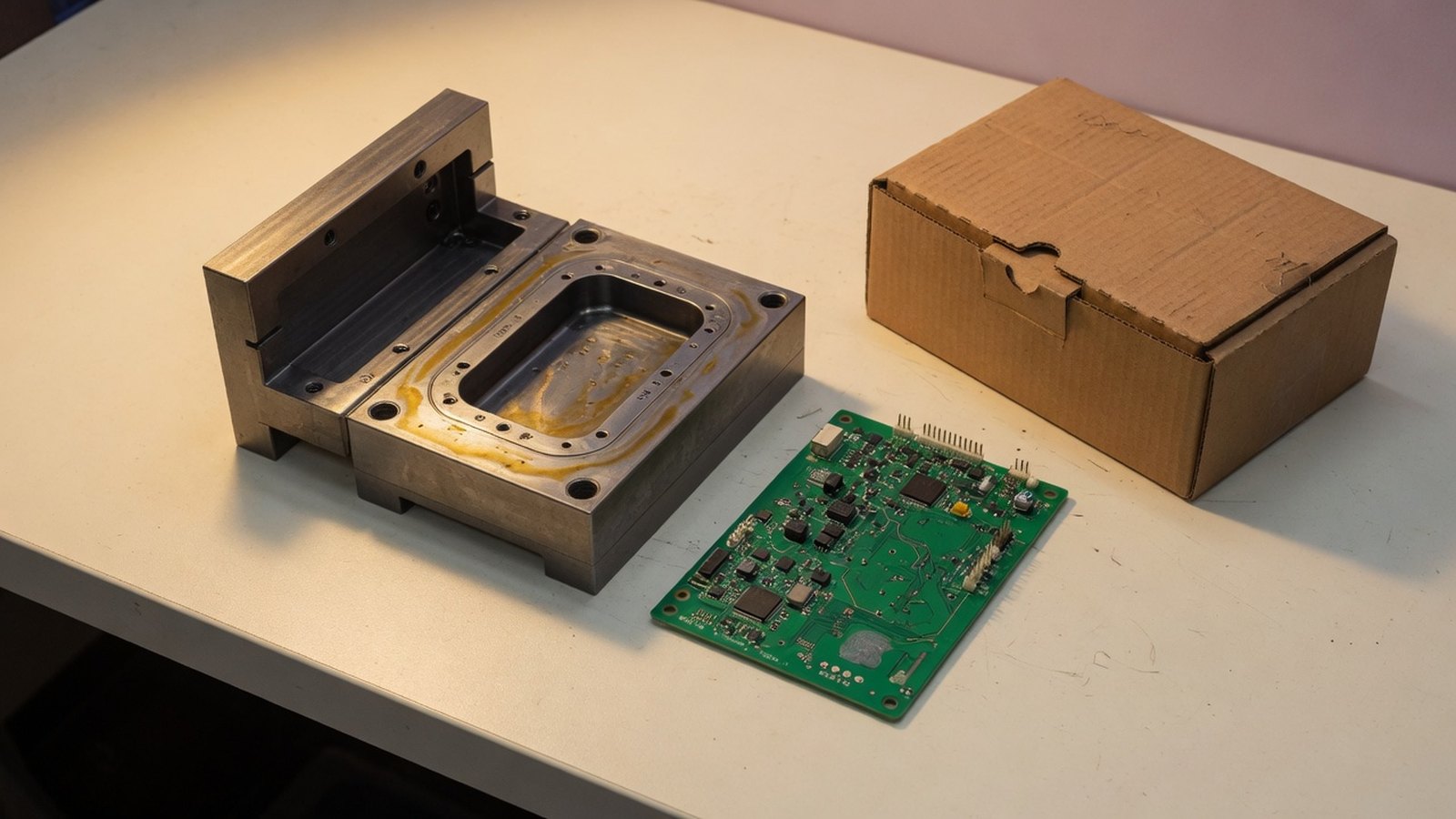
Tooling and machines from the partner factories that run these programs. The same programs extend to cut-and-sew goods: handbags, bags and tactical soft goods, custom retail packaging: boxes, tins and blister cards, insert molding and overmolding, blister and clamshell packaging, point of purchase displays, powder coating for metal parts, and the certificates and lab reports your buyer asks for.


Specifications
Why there's no tolerance table on this page.
It would be the easiest thing here to invent, and the most damaging to get wrong.
Tolerances
Confirmed per part, against your drawing, before anything is tooled. A tolerance that's true for one part is misleading for another, and a generic table would be marketing rather than engineering.
Lead times
Quoted per program once we've seen the part and the volume. Tooling, sampling and production have genuinely different clocks and averaging them helps nobody.
Materials
Chosen by what the part has to do. We will say when a material choice is wrong for the application, even when it's the one you asked for.
Tell us what the part is.
We’ll quote it against your drawing and tell you what the tooling actually needs to be.
Ask for time with JackFrom the notes
Written down, with sources.
- Two-shot molding vs overmolding: which does your part need?
Two-shot vs overmolding for soft-touch and two-material parts: how each works, tooling and volume break-points, bonding and design rules. - What is powder coating? A buyer's guide to the finish
What powder coating is, how a line runs, epoxy vs polyester powders, and the thickness and adhesion checks to write into your purchase order before a run. - Reverse engineering from a sample: what the part can't tell you
A scanned sample gives you geometry, not a specification. What scan-to-CAD reverse engineering produces, where tolerances get decided, and when to skip it.