

Insert molding & overmolding
Insert molding and overmolding: metal in, soft grip on.
JCH Design & Manufacturing runs insert molding and overmolding for US brands: threaded nuts, pins and metal parts molded into plastic, and a soft TPE or TPU layer molded over a rigid part, including two-shot (double) molding.
Jack's molding partners have made hand tool and power tool grips and phone cases this way. The metal insert or the rigid part goes into the tool, the plastic or the soft layer is shot around it, and the part comes out as one piece. Semi-automatic and automatic lines both run, depending on the part and the volume.

Three processes
Insert, overmold, two-shot.
They are related, and they get confused on quotes. The difference decides the tool, the press and the price.
Insert molding
A nut, a pin or a metal part is placed in the tool and the plastic is shot around it. Threaded inserts for screws, pins, and metal parts that add strength.
Overmolding
A soft TPE or TPU layer is molded over a rigid part that was molded first. Grips, bumpers, soft-touch handles and phone cases.
Two-shot and second-shot
The second material is molded onto the first, either in a two-shot press or as a second shot after the first part is made. Jack calls it double molding.
Materials
Rigid underneath, soft on top.
The materials used most right now are PC, PP and ABS for the rigid part, and TPE and TPU for the soft layer, with nylon now and then. The cheapest pairing is often the one people pick, but it depends on the product: how strong the part has to be, and how well the two materials hold together. Jack will say when a pairing is wrong for the part.
- Rigid partPC, PP, ABS; nylon at times
- Soft layerTPE, TPU
- InsertsNuts, pins, metal parts
- SizeSmall parts up to furniture-size parts
- LinesSemi-automatic and automatic
- TestingBend-strength and pull/peel test machines
The inserts and the bond
Sourced, placed, then pulled on.
Jack normally sources the inserts for the customer, so you give him the final specification and do not have to buy parts yourself. After molding, the bond is checked on the machine: a bend-strength test, and a pull or peel test that tries to separate the insert or the soft layer from the part.


Tooling and minimums
The cavities set the minimum.
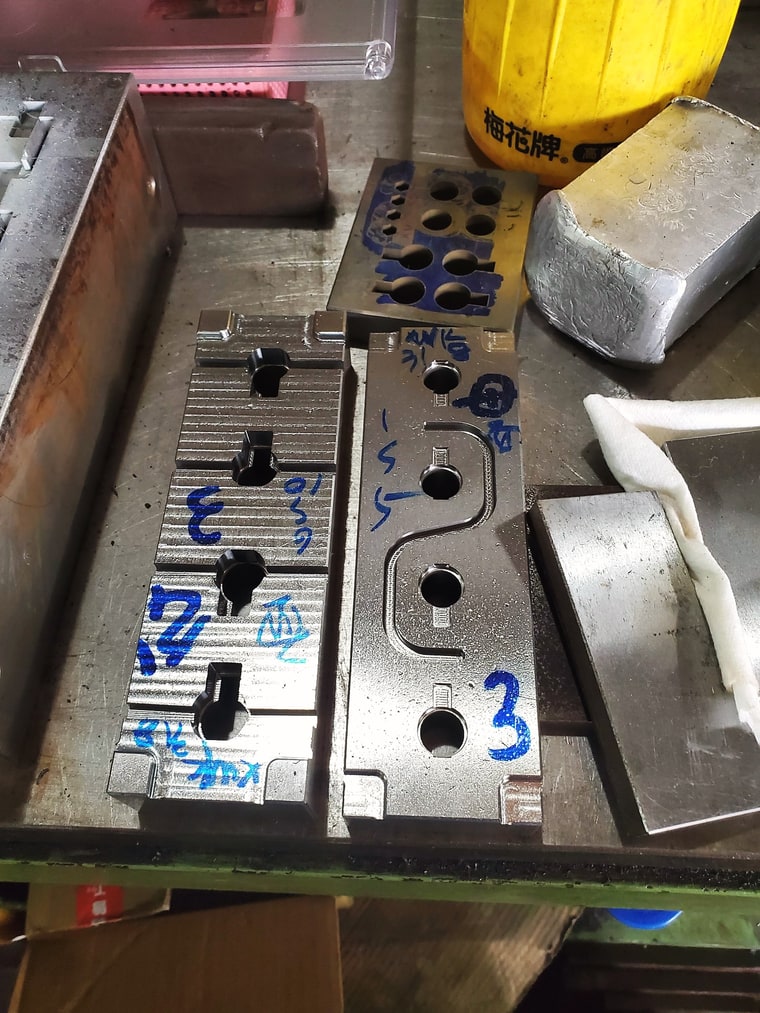
Tooling cost depends on how detailed the tool has to be, so it is quoted against your drawing or sample rather than from a price list. See what an injection mold really costs.
The minimum order depends on the size of the part and how many cavities the tool has. With a one-cavity tool, a run can start from about 500 to 1,000 pieces. A multi-cavity tool needs a larger run, or a machine fee is charged for a short one. More on which minimums are negotiable.
- Send the part.A drawing, a sample or a photo, the insert and the materials you have in mind.
- Tool and material review.Jack confirms the process (insert, overmold or two-shot), the material pairing and the cavity count.
- Samples and bond test.First parts are molded and bend and pull/peel tested before you approve.
- Production, watched.Lots are checked against the approved sample on the line. See line watch.
Questions
What buyers ask first.
What is the difference between insert molding and overmolding?
Insert molding shoots plastic around a part placed in the tool, usually a metal nut, pin or other metal part. Overmolding molds a second material, usually a soft TPE or TPU, over a rigid plastic part. Two-shot molding shoots both materials in one molding cycle.
What materials do you overmold?
Most often TPE or TPU over PC, PP or ABS, with nylon at times. The right pairing depends on how strong the part has to be and how well the two materials bond.
What is the minimum order for insert molding or overmolding?
It depends on the part size and the cavities in the tool. With a one-cavity tool, a run can start from about 500 to 1,000 pieces. Multi-cavity tools need larger runs, or a machine fee applies to a short run. This is an estimate, not a guarantee; the quote sets it.
How much does the tooling cost?
It depends on how detailed the tool has to be, so it is quoted per part against your drawing or sample.
Do I have to supply the metal inserts?
No. Jack normally sources the inserts for the customer; you give him the final specification.
How is the bond tested?
On test machines: a bend-strength test, and a pull or peel test that tries to separate the insert or the soft layer from the part.
Related
Have a part that needs an insert or a grip?
Send a drawing, a sample or a photo. Jack reads it himself and tells you plainly whether it is insert molding, overmolding or two-shot, and what the tool involves.
Ask for time with Jack