

How it works
From your idea or drawing to a US contract.
Six steps. The point of writing them down is that you can see exactly who is holding your program at any moment — Jack, with his own engineers and assembly people, and the factories he qualifies. One stop, including quality babysitting if the line is already running.
Each stage has its own page: idea, drawing and CAD, prototype, mold, molding, electronics and PCBA, cut and sew, packaging, inspection and freight to your dock.

The same party holds the program.


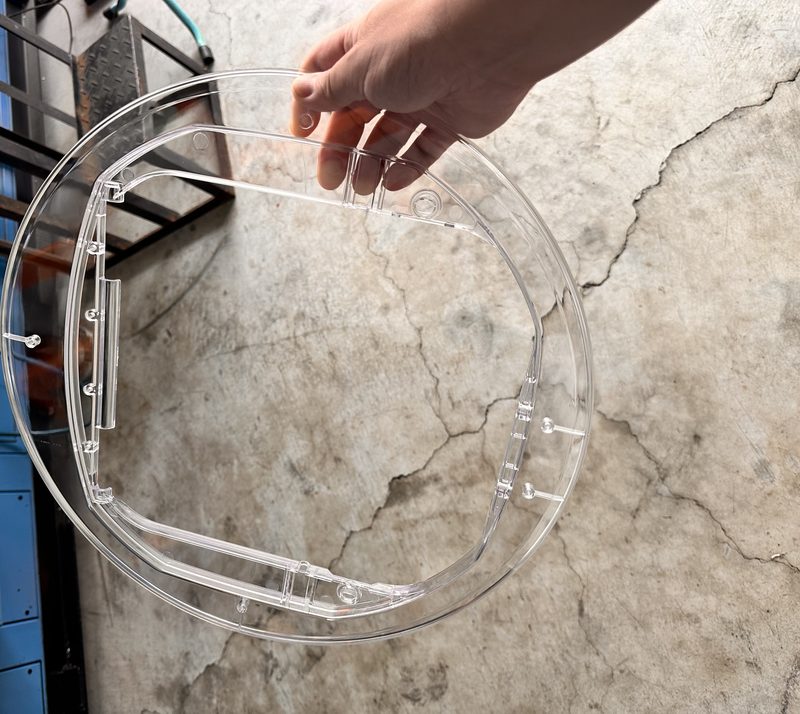

What that looks like on the floor
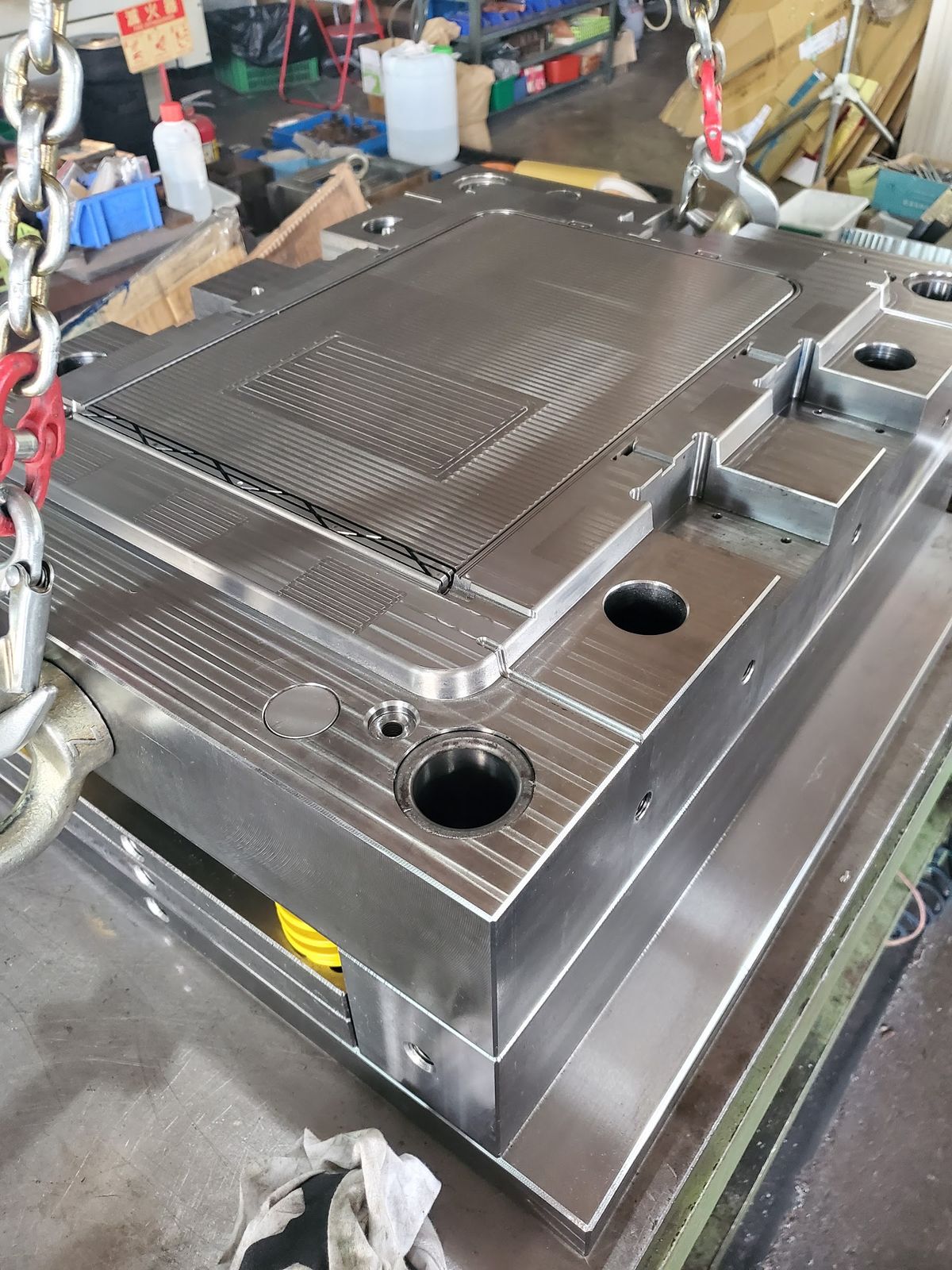
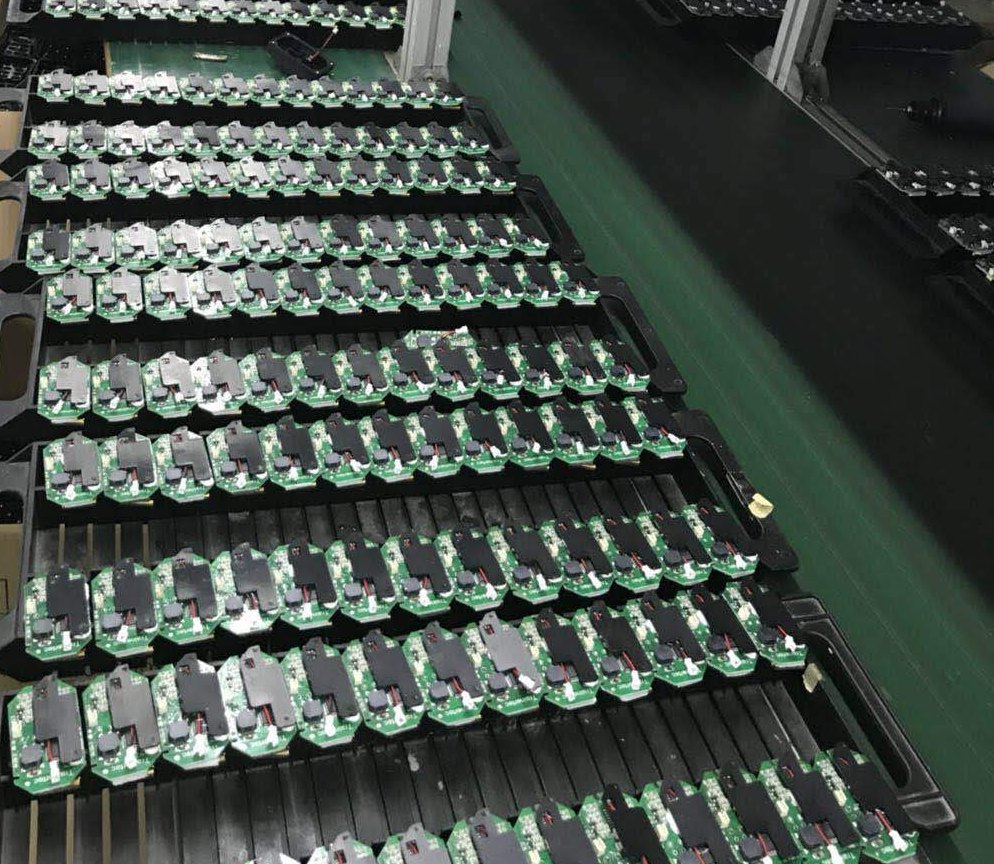
A plate in cut. Then the units on a tray.
Photographs from factories Jack qualifies. The steel is the tool. The trays are the goods.
Questions we get
Including the ones with awkward answers.
The full list, grouped by topic, is in the buyer FAQ.
Do you own the factories?
No, and we'll say so plainly. Jack has his own engineers, assembly and production people. Manufacturing also runs at qualified partner factories in Taiwan, China and Vietnam. What JCH owns is the engineering, the qualification, the inspection and the contract you sign.
Do you have your own team, or only factories?
Both, on purpose. Jack's own engineers, assemblers and production people do the work he can keep in-house. Qualified third-party factories take the shot, the volume, or a process his line is not set up for. You still deal with Jack.
Can you inspect manufacturing I already have running?
Yes. That is line watch. Jack speaks Mandarin on the floor. Vietnamese translators sit with his inspectors in Vietnam. First article, in-process, pre-ship, quantity and grade — so you are not flying over to stand on a line.
Are you ISO certified?
The entity is not. Our partner factories hold certification, and we'll name the partner and send the certificate on request. We won't show another company's certification mark as if it were ours; the seals on the certifications page are illustrations of standards we can source to, not certification marks.
What does it cost to get started?
A conversation costs nothing. Quoting a part against a drawing costs nothing. Tooling is quoted per part once we've seen what it is — there is no standard number and anyone who gives you one hasn't looked.
How small a project will you take?
No job too small, and none too big: any volume, from one part to millions. A first call costs nothing. Inventors and one-product businesses are welcome. If a tool won't pay for itself at your volume yet, we'll tell you early and suggest the cheaper first step, such as samples or a short run.
Can you work with tooling I already own?
Yes. Existing tools can transfer in, be audited, re-qualified and run. Send the tool drawing and the last inspection report you have, and you'll get a straight answer on whether it is worth moving.
Start with a call.
About 20 to 30 minutes is usually enough to know whether this is worth either of our time.
Ask for time with JackFrom the notes
Written down, with sources.
- Blister vs clamshell packaging: materials, costs and MOQs
Blister cards vs clamshells: how each is built, PVC vs PET vs RPET, what drives tooling and unit cost, typical minimums, and which suits your product. - Corrugated POP displays: floor stands, counter units and hook displays
A buyer's guide to corrugated POP displays: floor, counter and hook formats, board and print choices, published price ranges, minimums and freight. - Minimum order quantity: what is really negotiable, and what isn't
Why factories set a minimum order quantity, which parts of an MOQ are negotiable, and four honest ways a small buyer can order less without being dropped. - The last payment is your only leverage: payment terms that actually protect you
Why 30/70 T/T means paying in full before you see a part, and how to hold part of the balance behind a first-article inspection, escrow or an L/C. - Is it a real factory? How to check before you send a deposit
Four checks before a deposit: read the license scope, map the address, run a live video walk-through, and know when a $199–$350 per man-day audit pays off.