

Origin · duties · tariffs · the tool
Why Taiwan-made goods are not China-origin goods.
Most Americans hear “made in Asia” and picture China. US Customs does not. Taiwan is not China at the border. A product made in Taiwan — molded, formed or assembled there into a new article — is Taiwan-origin: a separate customs territory, with its own duties and tariffs. Jack is from Taiwan. He designs and supervises the steel there.
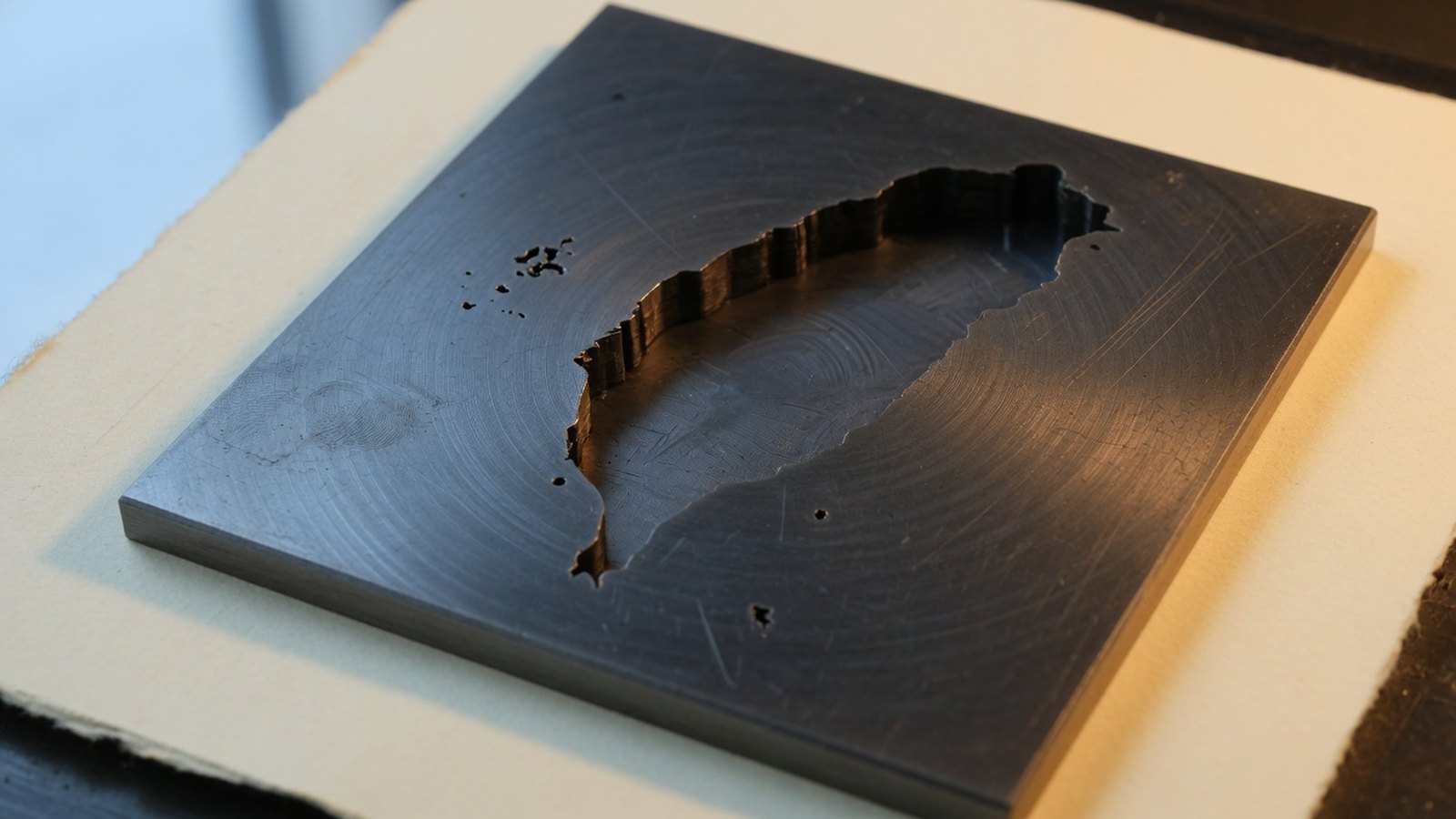
Country of origin is a legal fact, not a vibe.
The mix-up
Taiwan is not China for US trade.
Taiwan is not a province of the People’s Republic of China for US trade purposes. It is a separate customs territory, with its own tariff schedule, its own WTO membership, and its own country-of-origin code at the US border. Same neighborhood. Different invoice.
What people say
“It’s all China.” Same language family, same shipping lane. For a buyer who has never stood on a floor in Taichung, made-in-Taiwan and made-in-China feel like the same sentence.
What Customs says
Country of origin is a legal fact, not a vibe. CBP treats Taiwan-origin goods as Taiwan, not China. The 2018 Section 301 lists that add 7.5 to 25 percent (and more on some sectors) to China-origin goods do not apply to goods whose origin is Taiwan.
What Jack says
He is Taiwanese. He speaks to the toolmaker in the language of the floor and to you in English. The drawing does not get translated twice. That is the practical difference before anyone opens a tariff book.
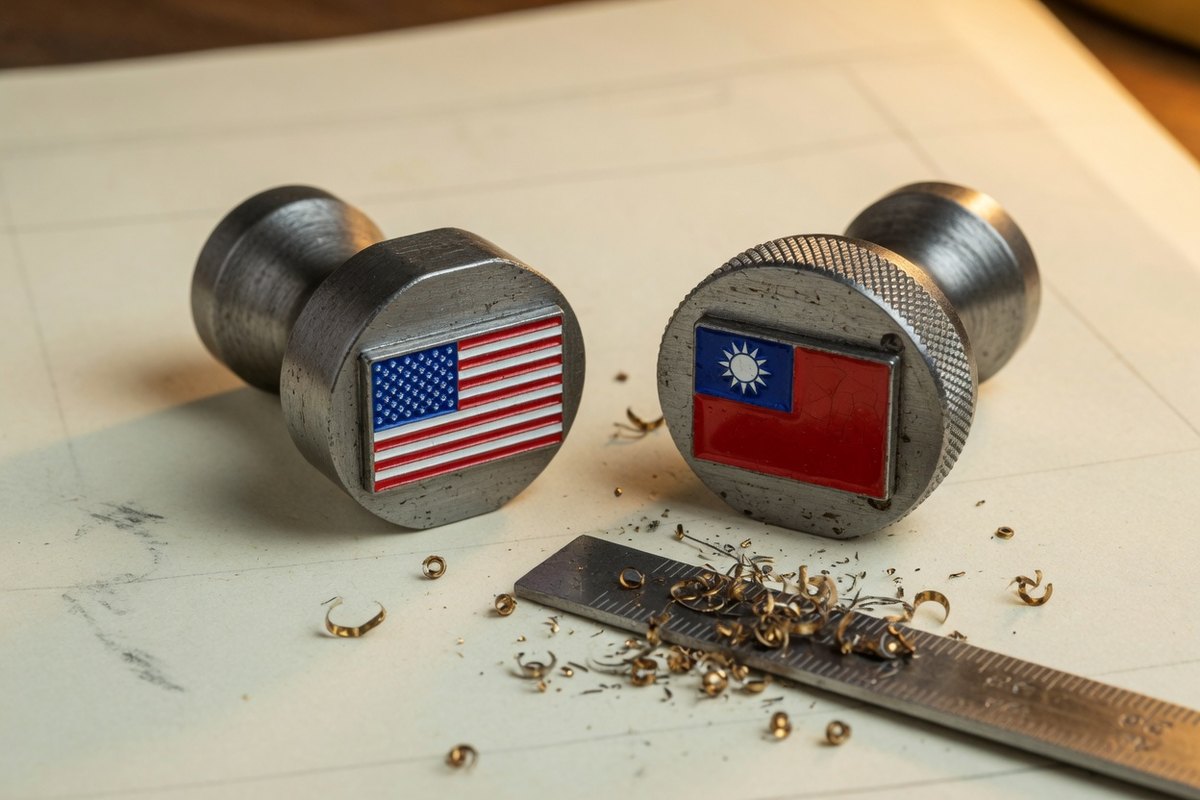
Favored nation, in English
Most-favored-nation is not duty-free.
“Favored trade status” is the phrase Americans remember from the news. The legal name is most-favored-nation, or MFN. It is the ordinary WTO tariff the United States charges most trading partners. It is not a free-trade agreement, and it is not a pass to skip duty.
What MFN actually is
Column 1 of the US tariff schedule. Taiwan has it as a separate customs territory. China has it too, under permanent normal trade relations. MFN is the floor, not the story.
Why China still costs more
The extra is the China-only stack: the 2018 Section 301 lists, later sector rates, and the July 2026 forced-labor 301 that adds 12.5 percent on top. Taiwan is outside those China lists.
What Taiwan is not
Mexico under USMCA. There is no duty-free pass on Taiwan-origin tools. The commercial advantage is the missing China 301 stack and the 10% cap on the July 2026 action — not a duty-free FTA.
Duties, as of September 2026
What actually hits the invoice.
Rates move. This is the stack as published this year — not a quote, and not advice. A licensed customs broker should read your HTS line before you price a program. We will not put a duty number on a website and call it yours.
| China-origin | Taiwan-origin | |
|---|---|---|
| 2018 Section 301 lists (tech transfer / IP) | Extra 7.5–25% on most listed goods; 2024 review added higher sector rates (for example 50% on some semiconductors, 25% on some batteries). These survived into 2026. | Does not apply. Taiwan is outside those China lists. |
| July 2026 Section 301 (forced-labor enforcement, 60 economies) | 12.5% on top of the China lists. | Capped so MFN + this action equals 10%. If MFN is already 10% or more, this action adds nothing. |
| US–Taiwan Agreement on Reciprocal Trade (signed Feb 2026) | Not a party to that agreement. | Set a 15% all-in rate. How that rate applies after the February 2026 IEEPA ruling and the July 2026 Section 301 action is still being worked out; current practice tops most Taiwan goods up to 10%. Rates change often — confirm with your customs broker (as of September 25, 2026). |
| Most-favored-nation (ordinary WTO rate) | China has MFN/PNTR. The extra China 301 lists are why the invoice still hurts. | Taiwan also trades with the US on MFN terms as a separate customs territory. The advantage is the missing China 301 stack, not a duty-free FTA like Mexico. |
Sources: USTR fact sheet on the US–Taiwan Agreement on Reciprocal Trade (Feb 2026); Federal Register notice of Section 301 forced-labor actions (July 2026); CBP country-of-origin practice (substantial transformation). Verify the live HTS line before you commit a landed cost.
The trap
Origin is not the port on the bill of lading.
Substantial transformation
CBP asks where the article last became a new article, not where the container was stuffed. A Chinese-made part shipped through Keelung is still China-origin. A “Taiwan invoice” on a China tool is how people get assessed later.
What we will not do
We will not relabel a China lot as Taiwan to dodge a list. If the right factories for your part are in China or Vietnam, Jack will say so, and the origin on the entry will match the floor.
What we will do
Tell you, before steel is cut, which territory the tool and the lot should carry — and what that does to the US entry, in the same conversation as cavity count and piece price.
Making tools and products in Taiwan
Why the tool itself is often cut in Taiwan.
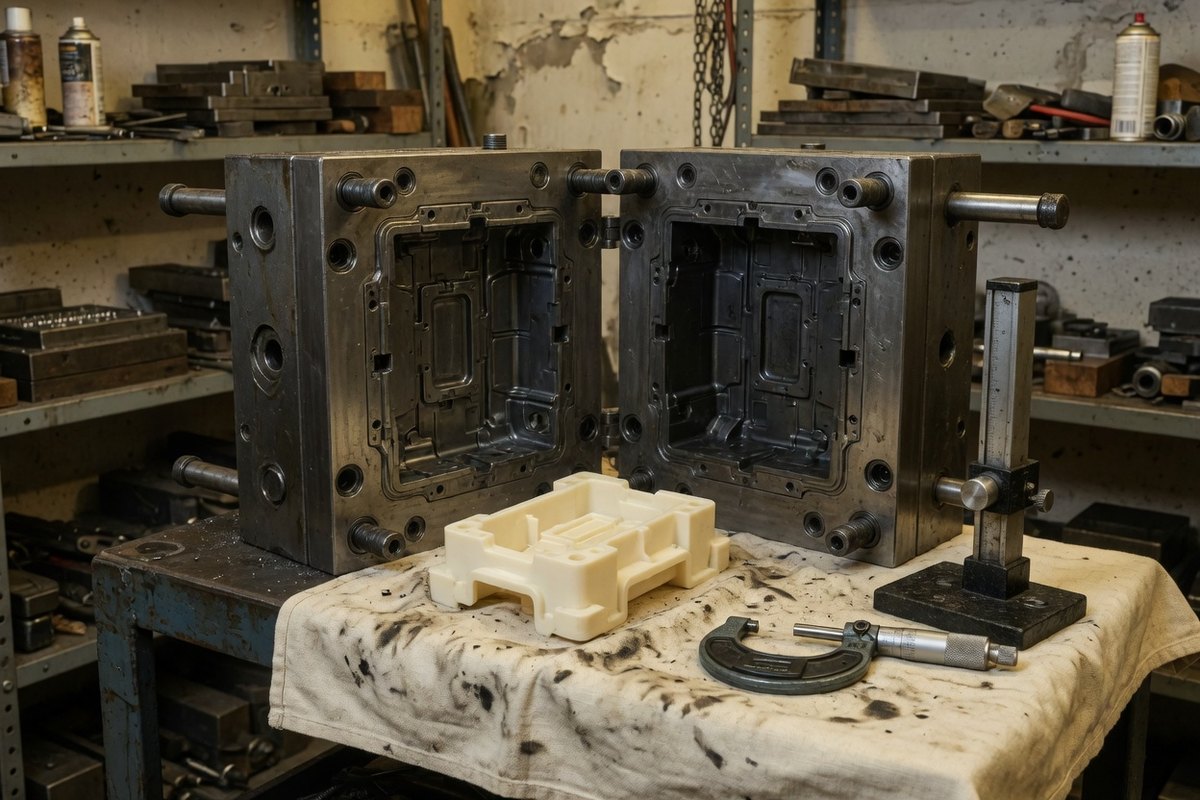
Duty is the invoice. The tool is the program. Jack’s life is the second one. Injection molds, try-out, and the first production lots for US-bound work are the reason he starts on that island. More on injection mold making in Taiwan.
The drawing stays the drawing
He specifies cavity, steel and finish with the shop that will cut it. English to you. Shop language on the floor. No account manager in between, no version of the CAD that gets rebuilt from a WhatsApp photo.
Try-out culture
First article is measured with him there. A mold that is wrong is still cheap to correct at try-out. It is expensive after a container has cleared Los Angeles.
The network is wider than one island
Jack also qualifies factories in China and Vietnam. Some electronics and some volume still belong there. Taiwan is the default for the tool and for US-bound programs where origin actually moves the landed cost. That is not a claim that the lot is Taiwan-made by default.
Tariff alternative
Is Taiwan a tariff alternative to China?
For a lot of products, yes — and the reason is arithmetic, not a special deal. Take a part with a 3% MFN rate (an illustration; your HTS line sets the real one). Made in China and on Section 301 List 1–3, it pays 3% + 25% + 12.5% = 40.5% of customs value. Made in Taiwan, it pays MFN topped up to 10%. On a $100,000 shipment that is $30,500 of duty. The gap is smaller on List 4A goods, and small on steel and aluminum products driven by Section 232, which applies whatever the origin. The full stack, layer by layer, is in Taiwan vs. China tariffs for US importers.
Where the gap is widest
China-origin goods on Lists 1–3, and programs riding one of the China exclusions that run out on November 10, 2026. Those are the first to price.
Where it is not
Section 232 metal products, where the 232 rate follows the goods to any origin. And any program where Taiwan’s piece price eats the duty saving. Compare landed cost against landed cost.
The condition
The origin has to be real. A Taiwan label on China-made goods is a customs violation, not a tariff strategy, and Jack will not do it.
Move production from China to Taiwan
How a move actually runs.
The sequence Jack uses. It takes weeks to a few months, not days, and most of the time goes into the tool and the first article.
1. The HTS line first
Classification, MFN rate, China list status, exclusions, Section 232. That says what the move is worth before anyone gets on a plane.
2. What makes it Taiwan-origin
Origin changes only with a substantial transformation. A part molded in Taiwan is generally a Taiwan product even if the mold came from China; assembling China-made subassemblies may not be. When in doubt, a CBP binding ruling settles it before the first entry.
3. The tool
If you own it, recover it with the paperwork: invoice, ownership clause, photographs, shot count. If it is worn or not yours, cut a new one in Taiwan — what a new mold costs, by class.
4. Prove it again
A tool moved to a new press is trialed and measured like a new T1: first article against the drawing, not against the old parts. Jack runs it and proves it before the first production shot.
5. What transfers
Drawings and CAD, the bill of materials, resin grade and color standard, the golden sample, the inspection plan, packaging dielines. The old shop’s process settings only move if someone wrote them down.
6. Pilot, then volume
Ship a pilot lot, check that the entry says Taiwan and the floor agrees, then move the volume. The risks: a tool that is not released, a component still made in China, a first article that does not match. All cheaper to find before the move.
Questions Americans actually type
Taiwan vs China, answered in the words people search.
Is Taiwan the same as China for US import duties?
No. For US trade, Taiwan is a separate customs territory from the People’s Republic of China. CBP treats Taiwan-origin goods as Taiwan, not China. Same neighborhood, different tariff stack.
Do Section 301 China tariffs apply to goods made in Taiwan?
No. The 2018 China Section 301 lists (extra 7.5 to 25 percent, plus later sector rates) apply to China-origin goods. They do not apply to goods whose origin is Taiwan. Origin is substantial transformation, not the port on the bill of lading.
What is most-favored-nation or favored trade status for Taiwan?
Most-favored-nation (MFN) is the ordinary WTO tariff the US charges most trading partners. Taiwan has MFN as a separate customs territory. That is not a free-trade agreement and not a skip of duty. The commercial advantage versus China is the missing China 301 stack, and the 10% combined cap on the July 2026 Section 301 action.
Is Taiwan a tariff alternative to China?
For many products, yes. Taiwan is a separate customs territory, outside the China Section 301 lists, and under the July 2026 Section 301 action its MFN rate plus the new duty is capped at 10% combined. China-origin goods on Lists 1–3 pay 25% plus 12.5% on top of MFN. The advantage is small for Section 232 metal products, and it only holds if the goods are genuinely made in Taiwan.
How do I move production from China to Taiwan?
Start with the HTS line and China list status, decide what must happen in Taiwan for the origin to change, recover or re-cut the tool, re-qualify it with a measured first article, move the drawings, BOM, resin spec, golden sample and inspection plan, then ship a pilot lot before the volume. Jack runs the whole sequence, in Mandarin on the floor and English with you.
Can I ship Chinese products through Taiwan to avoid extra duty?
No. CBP asks where the article last became a new article. A Chinese-made part stuffed in a container at Keelung is still China-origin. A Taiwan invoice on a China tool is how people get assessed later. Jack will not relabel a China lot as Taiwan.
Why make injection molds and products in Taiwan for the US market?
Jack is from Taiwan. He designs and supervises the tool there, in English with you and in the shop language on the floor. For many US-bound programs the origin also changes the duty stack. China and Vietnam remain in his network when that is the right factory.
From the notes
Written down, with sources.
- Tariff math: what moving one product from China to Taiwan actually saves
One molded product priced both ways: duty, MPF, harbor fee, freight and the one-time cost of moving the tool. Where the break-even point really sits. - What an injection mold really costs: typical ranges, lead times and custody
Injection mold cost, 2026 US figures: about $1,500–$8,000 for an aluminum prototype mold, $60,000–$150,000+ for hardened steel. Lead times, custody. - Taiwan vs. China Tariffs for US Importers in 2026: What Actually Stacks
The 2026 US duty stack: China pays MFN, the 2018 Section 301 lists and 12.5% since July 24; Taiwan goods are generally topped up to 10%. See the math. - Taiwan is a small island. The shops are not interchangeable.
Taiwan's mold and machine-tool trades sit within a few dozen km of central Taiwan. Why that density matters to buyers, and why origin can't be faked.